Bottom line: HLTV Rating is the community-standard measure of a CS2 player's overall performance, where 1.00 is an average game. Rating 2.0 blended kills, damage, survival, KAST and impact; the Rating 3.0 overhaul (August 2025) replaced impact with a new Round Swing metric that prices how each kill shifts the round-win chance, and adjusted the rest for the economy of each duel. This guide explains all three versions, with the underlying stats measured across our own CS2 data.
What HLTV Rating is
Player rating tries to answer an impossible question ("how well did this player actually play?") with a single number. HLTV's version is the one the Counter-Strike world settled on, and its scale is calibrated so that 1.00 is an average professional performance. Above 1.10 is a strong game; 1.20+ is elite; below 0.90 is a poor one.
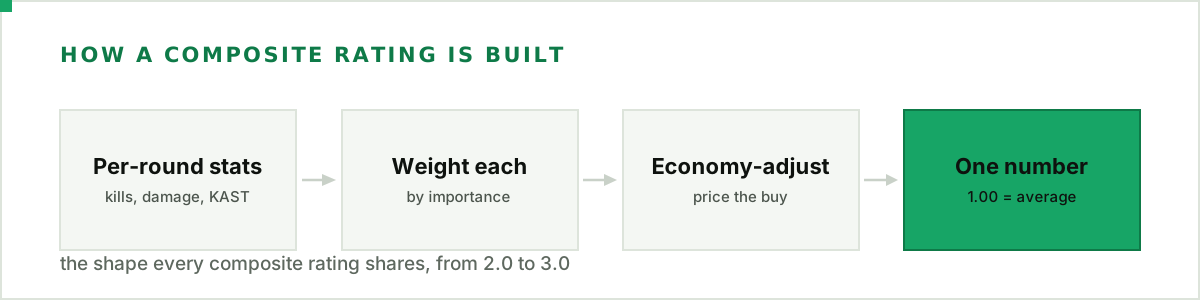
The appeal of a composite rating is that no single stat tells the whole story. Kills ignore the player who trades and takes space; KAST ignores how big a player's rounds were; ADR ignores survival and clutch context. A rating rolls them together and weights them, so one number captures more than any of its parts:
One clarification the words invite: a rating measures an individual player's per-round impact, while a ranking orders teams. A 1.30 rating says nothing about where a team sits in the Valve Regional Standings, which come from prize money, opponent quality and LAN results instead. See how CS2 rankings actually work for that side of it.
From 2.0 to 3.0
HLTV Rating has gone through three eras:
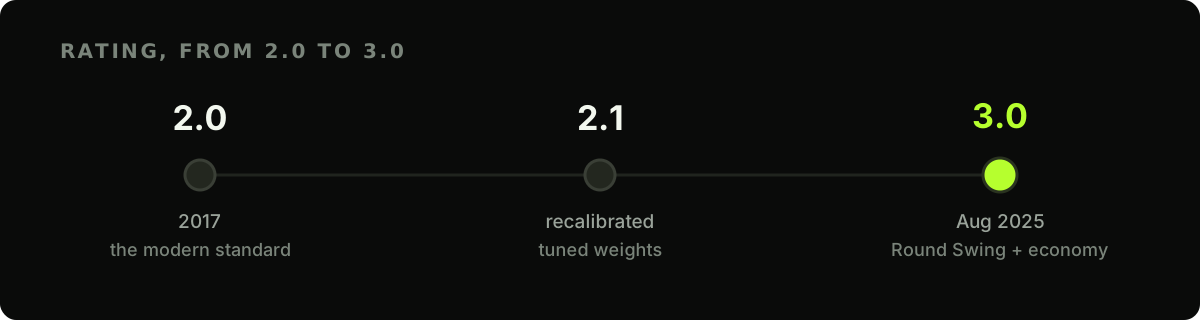
- Rating 2.0 (2017) became the modern standard. It combined kills per round, survival, KAST, ADR and an "impact" component into one figure.
- Rating 2.1 recalibrated the weights of those same ingredients for CS2 without changing the core idea.
- Rating 3.0 (August 2025) is the biggest overhaul since 2.0: a genuine rethink of what the number measures, not just a re-tune.
What changed in Rating 3.0
Rating 3.0 is built from six sub-ratings:
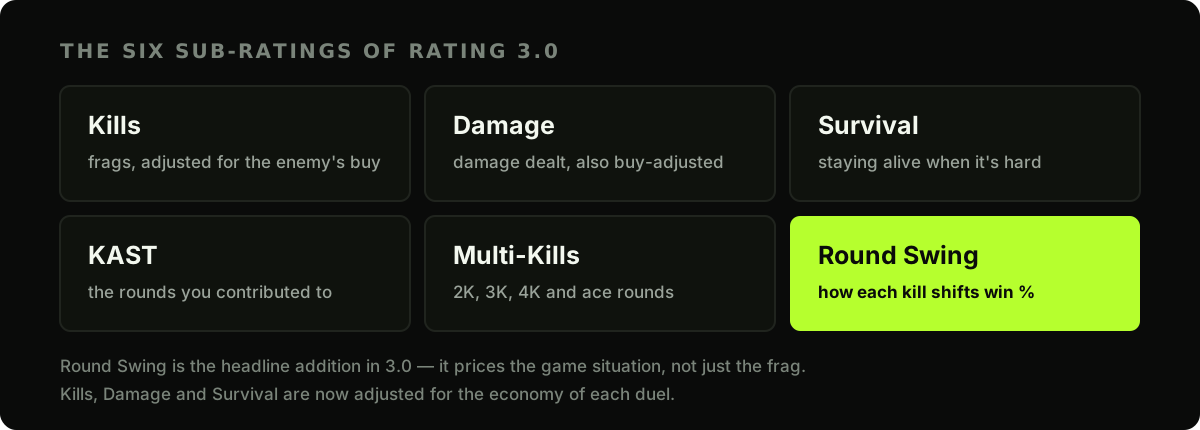
Two changes stand out:
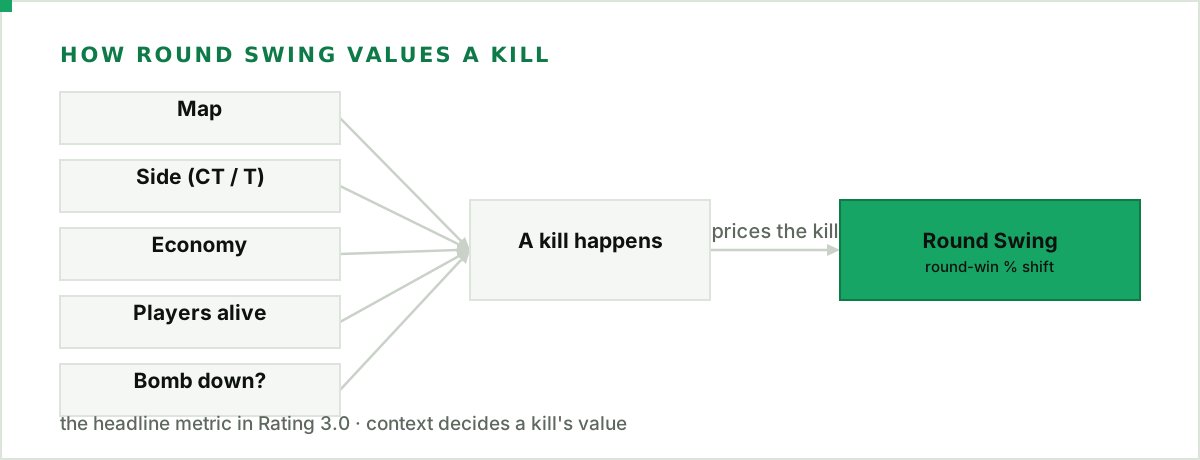
Round Swing replaces "impact." This is the headline. Round Swing measures how much each kill changes a team's probability of winning the round, given the map, the side, the economy, how many players are alive, and whether the bomb is down. A kill that flips a lost round into a likely win is worth far more than a kill in an already-won round. According to HLTV's own Rating 3.0 breakdown, most players land between roughly −1.5% and +1.5% on this metric over a season, with the very best around +3.7%. It's a much more contextual measure of impact than the old version, which counted multi-kills and clutches more mechanically.
Everything is economy-adjusted. Kills, damage and survival are now weighted by the buy behind them. Killing an opponent with a full rifle-and-armour setup is worth more than fragging someone on a starter pistol. In HLTV's new maths, a pistol-vs-full-buy kill counts for appreciably less than an even-economy duel. This fixed a real distortion in 2.0, where a cheap kill and a hard-won one counted the same.
(One post-launch wrinkle: after 3.0's launch HLTV rebalanced the formula to put a little more weight back on kills and damage and slightly less on Round Swing. The six components above are unchanged; only their weights were tuned.)
The raw material: multi-kills
The "Multi-Kills" sub-rating exists because the big rounds are rare. Here's how often each happened in our data, as of 10 July 2026:
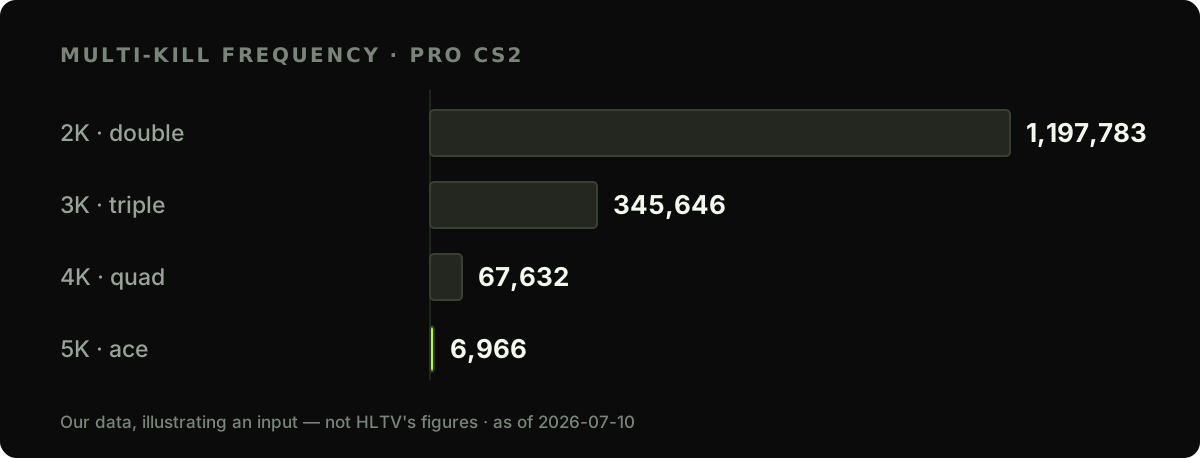
Double kills are routine, with over 1.2 million of them. But an ace (a five-kill round) is roughly 172 times rarer than a double: just 6,966 in our data as of 10 July 2026. That steep drop-off is why a rating has to weight a 4K or an ace so much more heavily than a 2K: the rarer the feat, the more it says about the round. (Our own figures, not HLTV's rating numbers.)
A note on where the number comes from
One honest clarification: EsportsOdds computes its own player rating (its methodology is documented) and serves the underlying stats (kills, ADR, KAST, headshots, multi-kills, opening duels, clutches), not HLTV's proprietary Rating figure. To build your own rating, or study what goes into any rating, you need those raw inputs cleanly and per match.
Getting the underlying stats from the API
Every ingredient of a modern rating is available per player, per map and per match through the EsportsOdds CS2 data API: kills and deaths, ADR, KAST, headshots, first kills and first deaths, trades, clutches and multi-kills, as clean JSON on a flat $49/month plan.
HLTV Rating measures overall performance, where 1.00 is average. Rating 3.0 (Aug 2025) rebuilt it around six sub-ratings, including the new Round Swing, which prices how each kill changes the team's round-win chance, and adjusted kills, damage and survival for the economy of each duel.
Frequently asked questions
What is a good HLTV rating?
On the standard scale, 1.00 is an average professional game: above 1.10 is strong, 1.20+ is elite, and below 0.90 is poor. The scale is calibrated so the average pro sits at 1.00.
What is HLTV Rating 3.0?
The 2025 overhaul of HLTV's player rating, built from six sub-ratings (Kills, Damage, Survival, KAST, Multi-Kills and the new Round Swing), with kills, damage and survival adjusted for the economy of each duel.
What is Round Swing?
Round Swing measures how much each kill changes a team's probability of winning the round, given the map, side, economy, players alive and bomb status. It's the headline new metric in Rating 3.0, and a more contextual measure of impact than the old "impact" component.
How is Rating 3.0 different from 2.0?
Rating 3.0 swaps the old "impact" component for Round Swing plus a separate multi-kill rating, and economy-adjusts kills, damage and survival, so a hard-won kill against a full buy counts for more than a cheap one. Rating 2.0 treated them the same.
Where can I get CS2 player rating stats via an API?
The EsportsOdds CS2 data API serves EsportsOdds' own rating plus every underlying stat (ADR, KAST, multi-kills, opening duels and more) per player and match, as clean JSON on a flat $49/month plan. That's the raw material to compute a rating your own way, or to audit how the published ones move release to release.
Cite this
EsportsOdds, "HLTV Rating explained: 2.0, 2.1 and the new 3.0", 10 July 2026. https://esportsodds.gg/learn/hltv-rating