Bottom line: KAST measures the percentage of rounds where you did something useful: got a Kill, an Assist, Survived, or were Traded. Across 205,595 professional performances in our data (as of 16 July 2026), the median is about 72% and an elite game clears 83%. Unlike raw kills, it rewards the support players and lurkers who hold a team together, which is why analysts value it. Every figure here is computed from the EsportsOdds CS2 data API.
What KAST measures
KAST stands for Kill, Assist, Survived, Traded. It answers a simple question, round by round: did this player contribute? A round counts toward your KAST if any one of those four things happened.
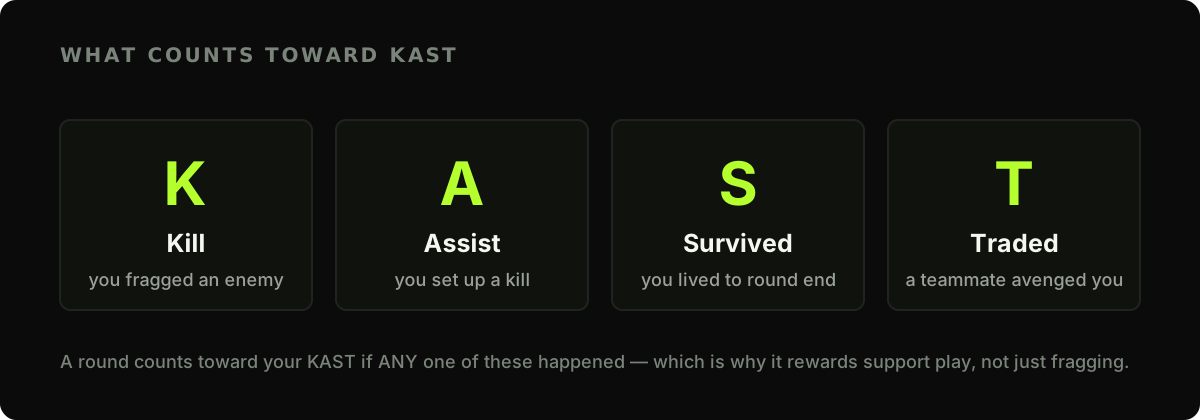
What makes KAST clever is the "any one of these" rule. You don't have to frag to have a good round. If you:
- got a kill, you contributed;
- landed an assist, damage or utility that set up a teammate's kill, you contributed;
- survived to the end of the round (keeping your gun and your economy), you contributed;
- died but were traded, a teammate immediately avenged you, so your death still bought space.
Only one kind of round doesn't count: you died early, for nothing, with no impact and no trade. KAST therefore measures how rarely a player is a pure liability. A high KAST means you are almost always adding something.
What counts as a good KAST
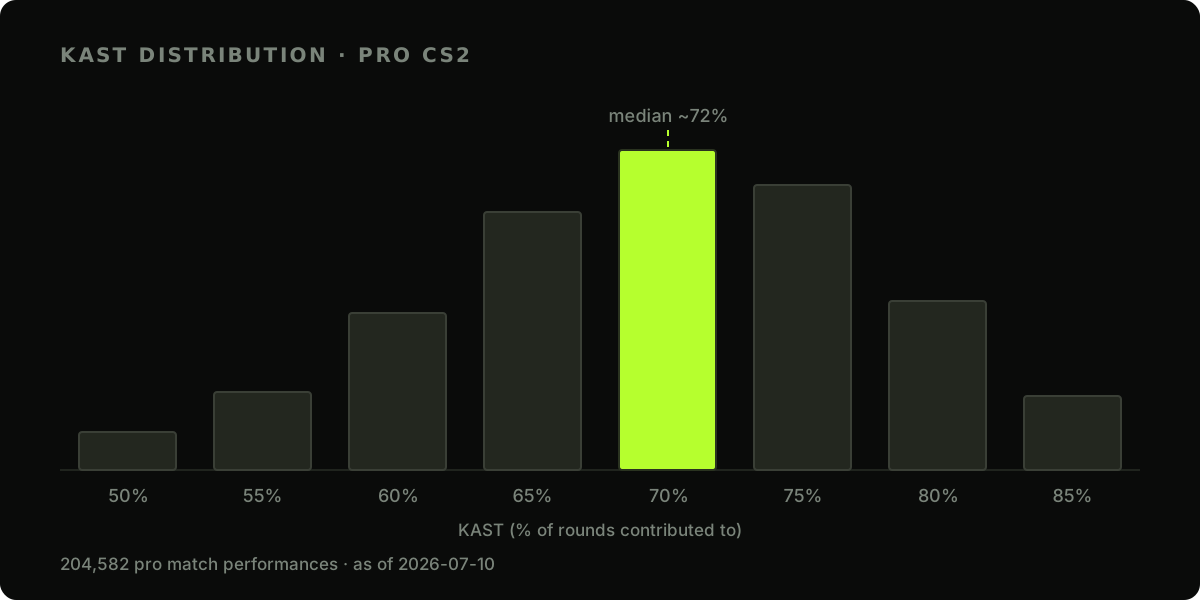
Here is the distribution across those 205,595 professional performances. It centres on a median near 72%, with the bulk of players between 60% and 82%.
Turned into benchmarks:
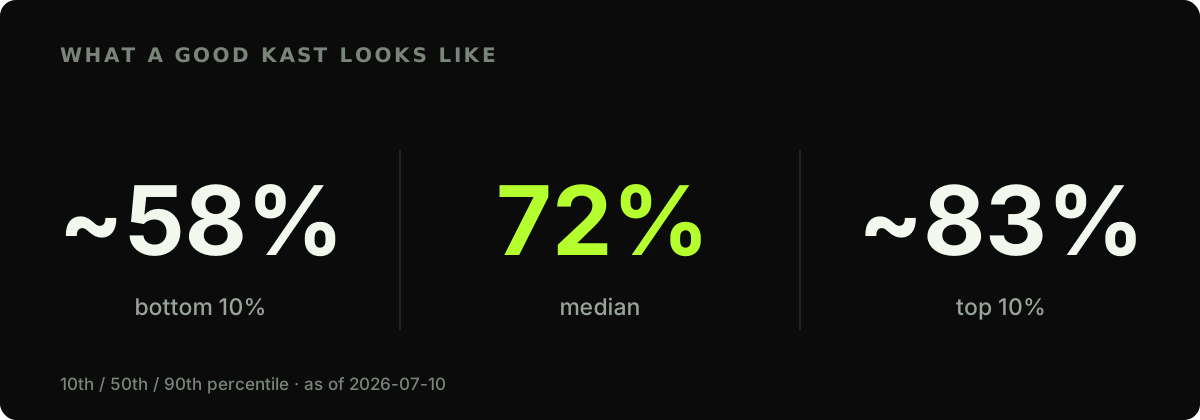
| KAST | Read |
|---|---|
| ~58% (bottom 10%) | A poor game, too many empty rounds |
| ~72% (median) | A typical pro performance |
| ~83% (top 10%) | Elite, contributing almost every round |
Because KAST is bounded at 100% and most pro players cluster in a fairly narrow band, small differences matter. A player at 78% is meaningfully more consistent than one at 68%. That ten-point gap is the difference between an anchor and a passenger over a long series.
Why KAST rewards the players kills miss
The reason coaches and analysts lean on KAST is that it surfaces value a kill count hides. Consider two players who both finish a map with 15 kills:
- One got their frags in clusters: three big rounds, then several where they died early for nothing.
- The other spread their impact: a kill here, an assist there, a survived save round, a traded entry.
Their kill counts are identical. Their KAST is not. The second player has a much higher one, because they contributed to far more rounds. That second profile is what wins Counter-Strike, and KAST is the stat that sees it.
This is also why support players and lurkers often post the highest KAST on a roster while sitting mid-table in kills. Their job is to trade, to take space, to survive with information, all of which KAST rewards and a K/D ignores.
KAST vs ADR and rating
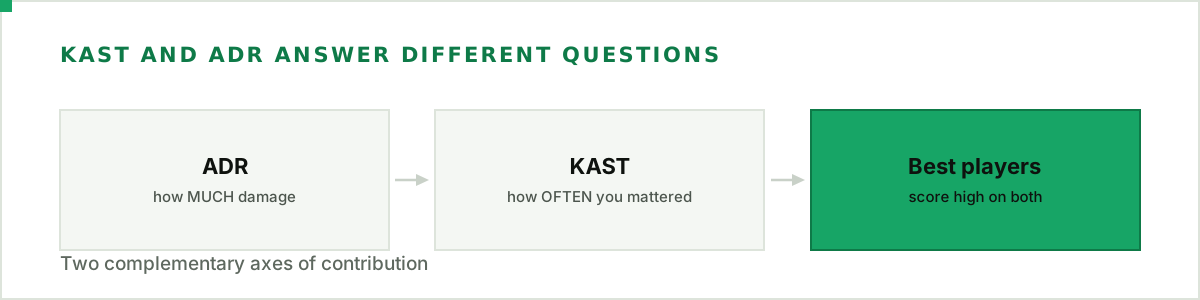
KAST pairs naturally with ADR: ADR tells you how much damage a player did, KAST tells you how often they mattered. A player can have high ADR but mediocre KAST (big damage in a few rounds, quiet in the rest) or high KAST but modest ADR (constant small contributions). The most valuable players score well on both.
That complementarity is deliberate. KAST is binary within a round: it asks only whether you contributed, not by how much, so a single-damage assist and a triple kill both count exactly once. That is what keeps it robust and readable, and also why it can never stand in for output on its own. ADR supplies the magnitude KAST leaves out, which is why the two are almost always read together.
Both feed into composite player ratings. KAST is one of the named sub-components of HLTV's Rating 3.0, part of how "consistency" is priced into a single number. On its own, though, KAST stays the most readable answer to "was this player a reliable contributor?"
Getting KAST from the API
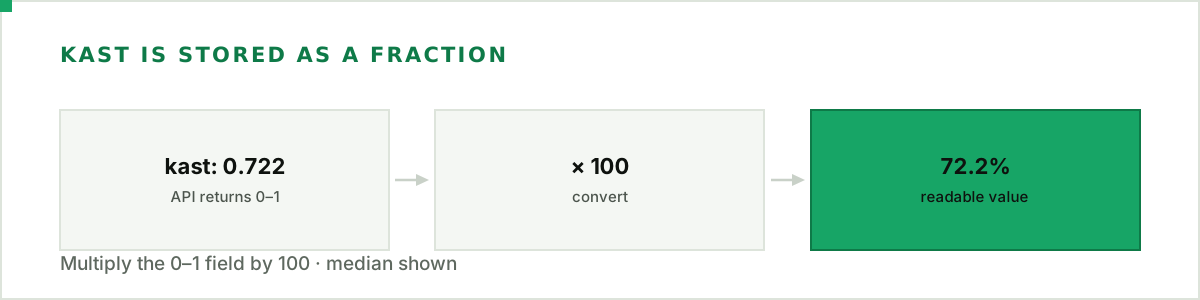
KAST is returned per player, per map and per match through the EsportsOdds CS2 data API, alongside the rest of the box score: kills, assists, deaths, ADR, headshots, opening duels and clutches. One integration gotcha to know: the kast field is stored as a fraction between 0 and 1, not a percentage, so a value of 0.722 means 72.2%. Multiply by 100 before you display it. Skip that step and a leaderboard renders "0.72%" or sorts every player into a flat band near zero, a bug that is easy to miss because the raw numbers still look plausible. The guides walk through this and the rest of the stats payload in code, and our methodology page sets out exactly how KAST is computed.
A consistency leaderboard, or a fantasy model that values contribution over raw fragging, is a quick build from those rows, delivered as clean JSON.
KAST is the percentage of rounds you contributed to, by a kill, assist, survival or trade. Pro median is about 72%, elite is 83%+. It rewards the support play that kills miss, the best single measure of consistency.
Frequently asked questions
What is a good KAST in CS2?
In professional play, around 72% is average and the top 10% of games clear about 83%. Below roughly 58% suggests a player is dying for nothing too often. As with all pro benchmarks, ranked matchmaking looks different and more variable.
What does KAST stand for?
Kill, Assist, Survived, Traded. A round counts toward your KAST if any one of those four things happened, so it captures contribution far beyond just getting kills.
Is KAST better than K/D ratio?
They measure different things. K/D asks whether you win duels; KAST asks how often you contribute to rounds at all. KAST is the better measure of consistency and support value, so support players often lead a team in KAST while sitting lower in kills.
How is KAST different from ADR?
ADR measures how much damage you deal per round; KAST measures how often you contribute to a round in any way. They are complementary: the best players rate highly on both.
Where can I get CS2 KAST data via an API?
Through the EsportsOdds CS2 data API: per-map and per-match KAST as JSON, remembering to read it as a 0-to-1 fraction. Pull a roster's season and the consistency picture the box score hides falls straight out.
Cite this
EsportsOdds, "KAST in CS2 explained: kill, assist, survived, traded", 10 July 2026. https://esportsodds.gg/learn/cs2-kast