Bottom line: Removing the margin from a two-way market takes four steps and no special tools. Convert each price to a probability, add them up, divide each one by that total, and convert back. Two prices of −110 become a fair 50/50 at +100. This page walks the arithmetic; the no-vig calculator does it for you on any market you paste in.
The four steps
Every de-vig, however elaborate the method, is the same shape: get to probabilities, find the excess, remove it, get back to prices.
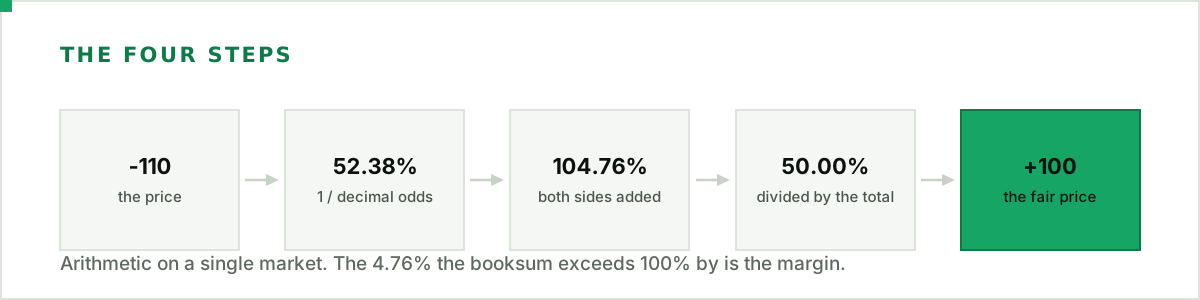
Step 1: convert each price to a probability. For decimal odds it is 1 ÷ price. For American odds it is 100 ÷ (odds + 100) when the price is positive and odds ÷ (odds + 100) when it is negative, ignoring the sign. So −110 becomes 110 ÷ 210 = 52.38%. The implied probability calculator handles any format if you would rather not do it by hand.
Step 2: add them up. On a fair market the probabilities of every outcome would total exactly 100%, because one of them is certain to happen. In practice they total more. Two sides at 52.38% each come to 104.76%. That total is the booksum, and the 4.76% it exceeds 100% by is the margin.
Step 3: divide each probability by the total. 52.38% ÷ 1.0476 = 50.00%. Do it to every outcome and the set now sums to exactly 100%. This is the multiplicative method, and it is the default everywhere for a reason: it is one division, and it keeps each outcome's share of the market proportional.
Step 4: convert back. A fair probability of 50% is decimal 1 ÷ 0.50 = 2.00, which is +100 in American odds. That is the price the market would show if nobody took a cut.
What actually changed
The interesting part is what the margin was hiding. Here is a −250/+200 market, both sides, before and after.
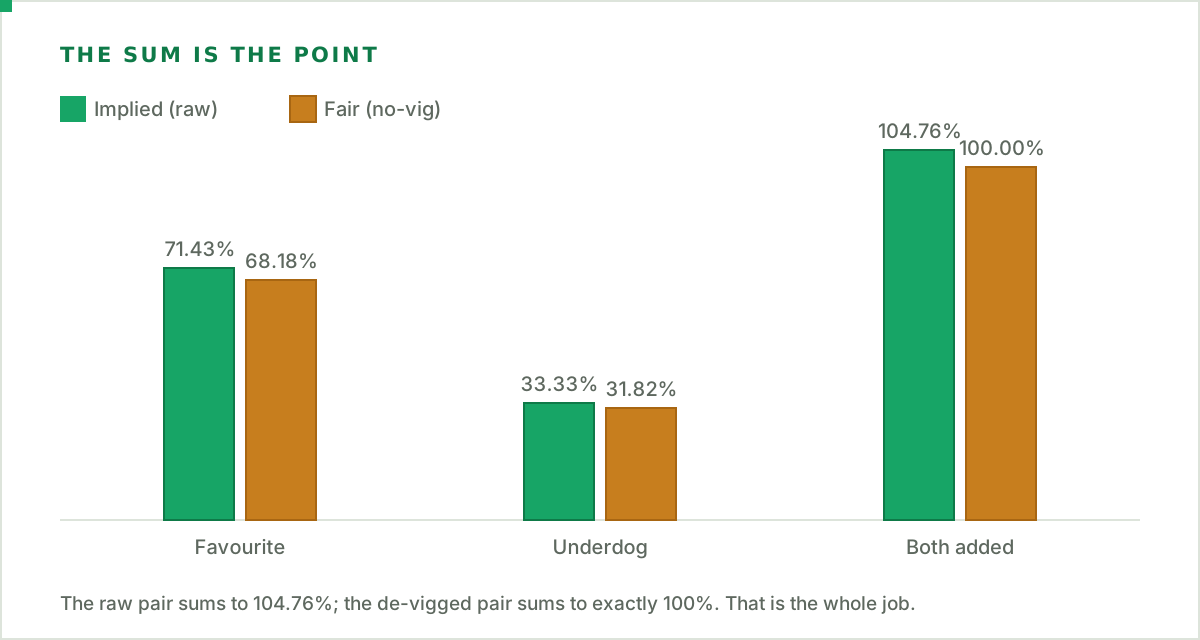
Both sides come down, because both were inflated. The favourite loses 3.25 percentage points and the underdog 1.51, and the total lands on exactly 100%. That last number is the check: if your de-vigged probabilities do not sum to 100%, the arithmetic went wrong somewhere.
It matters more on lopsided markets
On a coin-flip market the correction is small and roughly symmetric. The further a market moves from even, the more the raw number overstates the favourite.
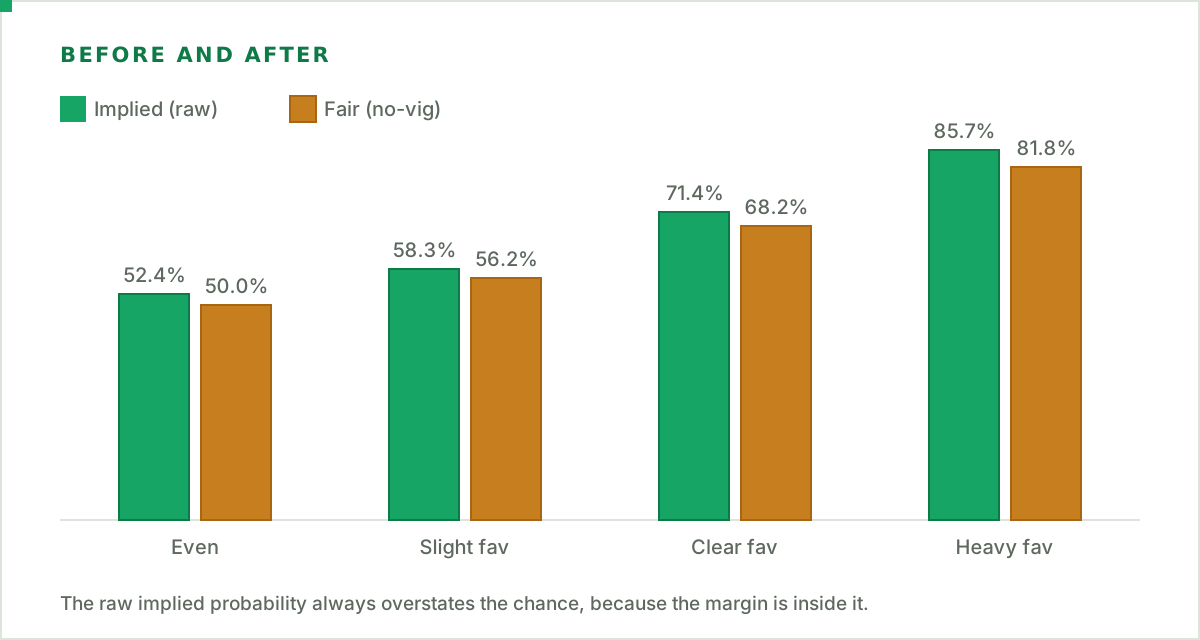
At −600 the raw implied probability reads 85.71%, and the fair number is 81.82% — a gap of nearly four percentage points. If you are comparing a market price against your own model, that gap is the difference between agreeing and disagreeing.
After de-vigging, add your probabilities back up. They must come to exactly 100%. It is the one test that catches a dropped outcome, a mis-typed price, or a conversion done in the wrong direction.
When the simple method is not enough
Everything above uses the multiplicative method, which assumes the margin sits proportionally across the outcomes. There is a good argument that it does not — that longshots carry more of it than their share. Three other methods (additive, power and Shin) distribute the removal differently, and on a lopsided market they disagree with multiplicative by more than two percentage points. That comparison has its own page.
For the concepts underneath this, see the vig explained for the longer treatment, or the glossary entries for vig, de-vigging and no-vig odds. This is the same arithmetic behind the single CS2 market line we publish, documented on the methodology page.