Bottom line: ADR, average damage per round, is the cleanest single measure of a CS2 player's output. Across 205,676 professional match performances in our data (as of 16 July 2026), the median is about 73, a strong game sits near 82, and an elite one clears 92. It tracks overall rating closely without the noise of kill/death ratio, so analysts reach for it first. Every figure here is computed from the EsportsOdds CS2 data API.
What ADR actually is
ADR stands for average damage per round. It is exactly what it sounds like: the total damage a player deals across a map, divided by the number of rounds played.
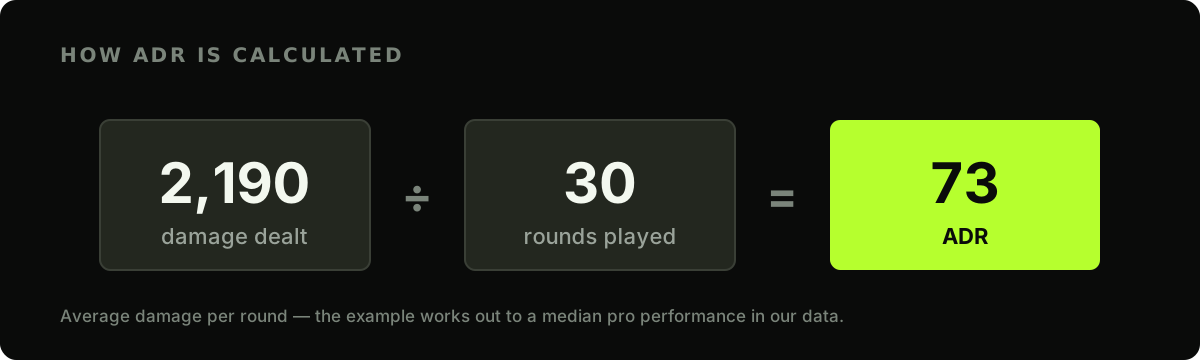
Because a kill in Counter-Strike requires 100 damage to a full-health opponent, ADR is closely tied to fragging. But it also rewards the chip damage that sets up a teammate's kill, the utility damage from an HE grenade or Molotov, and the shots that force an enemy to back off. Kill/death ratio ignores all of that; ADR captures it.
That is why ADR is more stable than K/D. Kills are lumpy: one multi-kill round swings a K/D, whereas damage accumulates in small increments every round, converging on a player's true level faster.
What counts as a good ADR
Here is the actual distribution of ADR across those professional performances (aggregated per player, per match). It is close to a normal curve centred on a median of roughly 73.
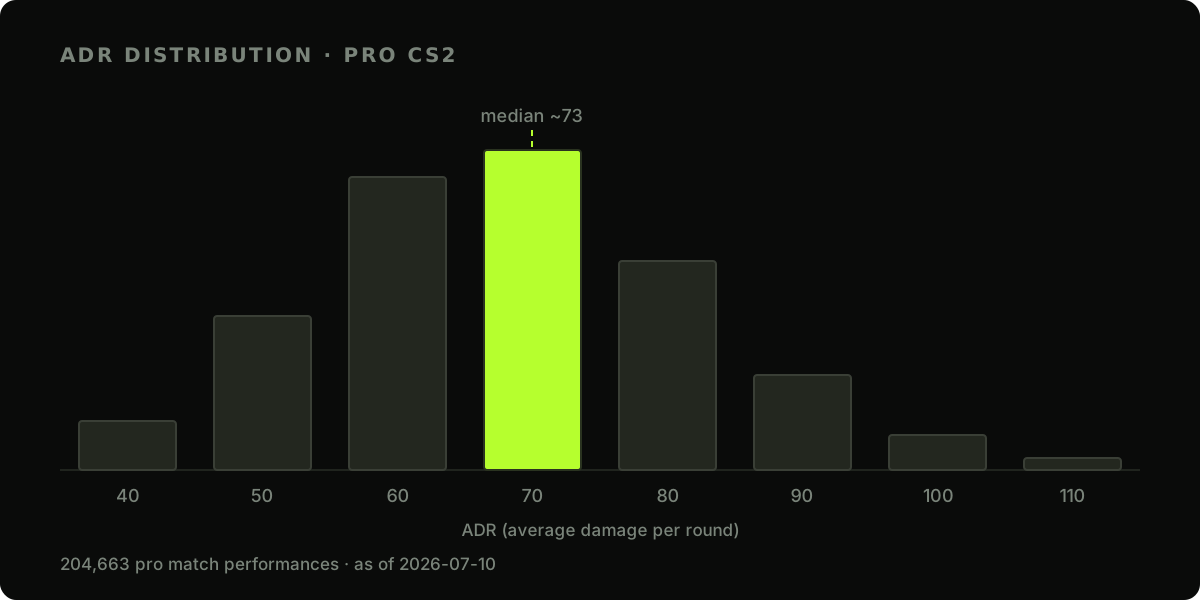
The benchmarks that fall out of that distribution:
| ADR | Percentile | Read |
|---|---|---|
| ~55 | Bottom 10% | A quiet game, low output |
| ~63 | 25th | Below the pack |
| ~73 | Median | A typical pro performance |
| ~82 | 75th | A strong, impactful game |
| ~92 | Top 10% | Elite, carrying the map |
So when a broadcast analyst says a player "had a huge game," they usually mean an ADR up around 90 or beyond. A player sitting at 60 across a series is having a rough time by professional standards, even if their kill count looks respectable.
One caveat: these benchmarks are for professional Counter-Strike. Matchmaking distributions look different and far more variable, because the skill gap within a single game is larger. They describe the pro game, not your own ranked matches.
ADR tracks rating almost linearly
The reason ADR is trusted as a shorthand for impact is that it correlates tightly with overall player rating. Group every performance by its rating band and average the ADR in each, and the relationship is almost a straight line:
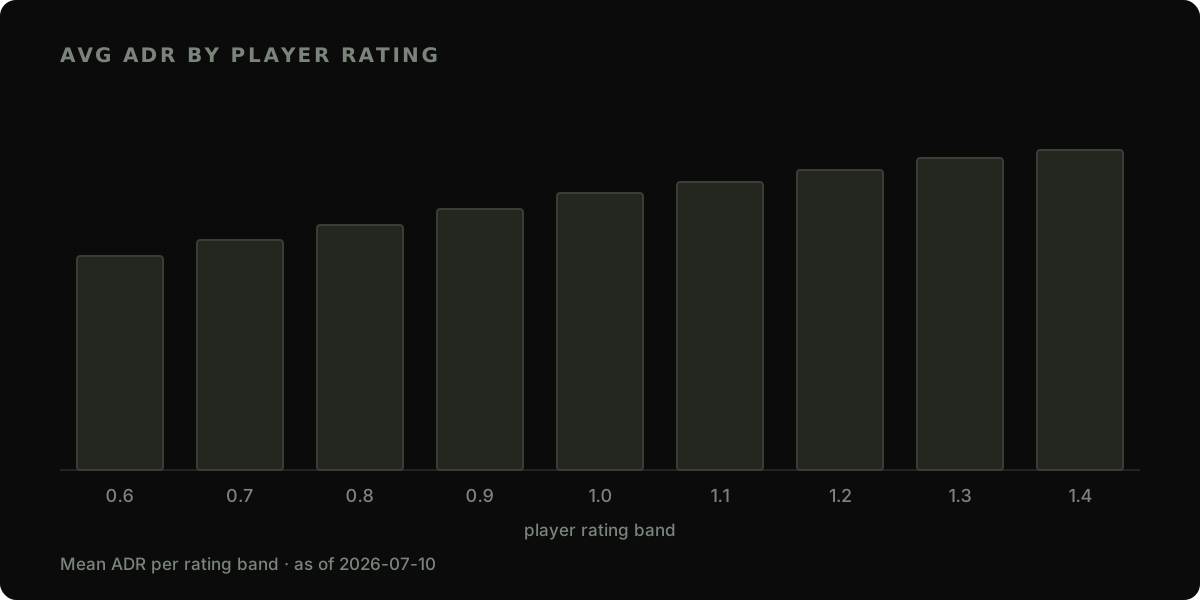
A 0.6-rated performance averages about 55 ADR; a 1.0 (an average game) sits near 71; a 1.4 (an elite game) clears 81. There is no band where higher rating fails to mean higher damage. Some of that tightness is mechanical: damage is itself one of the inputs to a composite rating (HLTV's Rating 3.0 weights damage output alongside survival, KAST and multi-kills), so a component will always track the composite that contains it. The chart illustrates ADR's value rather than proving it. Either way, it is what makes ADR a good "first look" number: you can glance at it and know roughly how a player performed before opening the full rating breakdown.
It is not a complete picture: a lurker who deals steady damage but wins few duels, or an entry fragger who trades their life for space, can post similar ADR but very different value. That nuance is what KAST and the newer Round Swing metric add. As a single number, though, ADR is hard to beat.
ADR vs KDA: why analysts prefer it
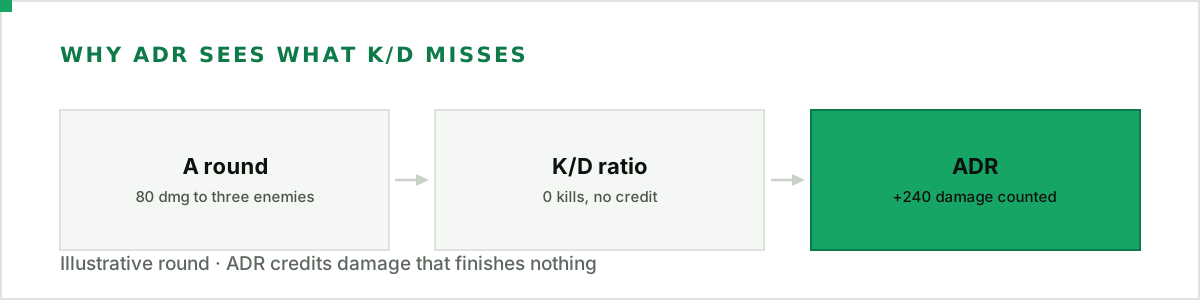
Three reasons ADR earns its place over the familiar kill/death ratio:
- It counts damage, not just finishes. The player who softens two enemies for a teammate to clean up gets credit. K/D gives them nothing.
- It is less streaky. Damage accrues every round; kills arrive in clusters. Over a Bo3, ADR settles closer to a player's real level.
- It resists farming. Padding kills in a lost round barely moves ADR; a player cannot inflate it the way they can a K/D on exit frags.
K/D is not useless: it answers a different question, whether you won your duels. But for a single output number, ADR is the more honest one.
Getting ADR from the API
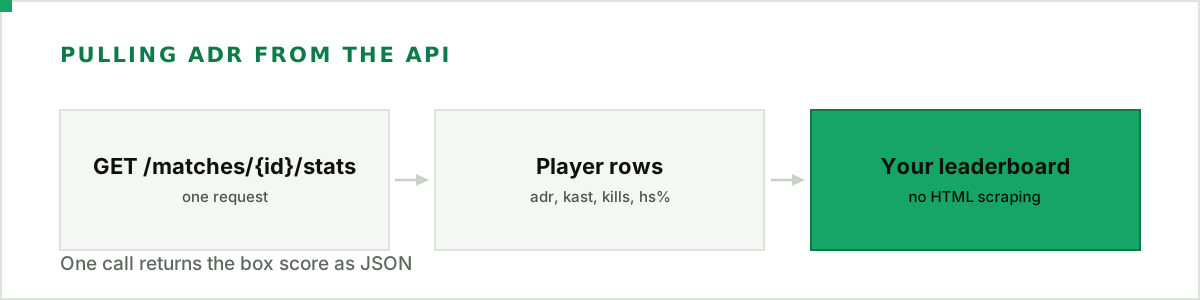
Every player's per-map and per-match ADR is available through the EsportsOdds CS2 data API, alongside kills, deaths, assists, KAST, headshots, opening duels and the rest of the box score. The player-stats payload returns ADR as a plain number per player, so a leaderboard, form chart, or fantasy projection is a quick build with no scraping. This is the CS2 data sites like HLTV display, as clean JSON so you compute these benchmarks yourself; exactly how each figure is derived is set out on our methodology page.
ADR is damage per round. In pro Counter-Strike the median is about 73, a strong game is ~82, and elite is ~92. It tracks rating almost linearly and is steadier than K/D, the best single number for "how did this player perform?"
Frequently asked questions
What is a good ADR in CS2?
For professional play, an ADR around 80 is a strong game and 90+ is elite. The median pro performance sits near 73 in our data. In ranked matchmaking the bar is lower and far more variable, so these pro benchmarks do not map directly onto a Premier or matchmaking game.
How is ADR calculated?
Total damage dealt divided by rounds played. Because 100 damage kills a full-health opponent, ADR is closely linked to fragging, but it also credits partial damage that does not result in a kill, which is why it gives a fuller picture than kills alone.
Is ADR better than K/D ratio?
For measuring output, generally yes: ADR counts damage that sets up kills, is less streaky across a series, and is harder to inflate. K/D still answers a useful, different question, whether you win your duels. Analysts use both.
What is the difference between ADR and rating?
ADR is a single raw output stat (damage per round). Rating, such as HLTV Rating 3.0, is a composite that blends ADR with survival, KAST, multi-kills and round context into one number. ADR is one of the ingredients of rating.
Where can I get CS2 ADR data programmatically?
Through the EsportsOdds CS2 data API: per-map and per-match player statistics, including ADR, as JSON. Pull a season of performances and the 73/82/92 benchmarks fall straight out of your own numbers.
Cite this
EsportsOdds, "CS2 ADR explained: what average damage per round really measures", 10 July 2026. https://esportsodds.gg/learn/cs2-adr