Bottom line: Convert both sides of a market to probabilities and they add up to more than 100% — 104.76% on a standard −110/−110 pair. The excess is the margin, and it is built into every price rather than charged on top. It is also why a raw implied probability always overstates an outcome's real chance, and why comparing two markets means removing the margin from each first.
Two coin flips that add up to more than one event
Take the most ordinary market there is: two outcomes, both priced −110.
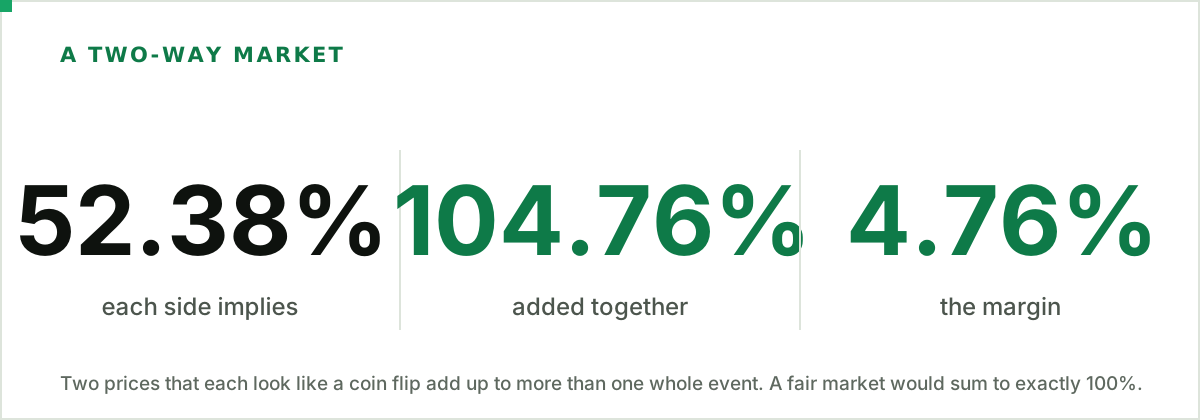
Each side, read on its own, says "this happens 52.38% of the time". But exactly one of the two outcomes will happen, so their true probabilities have to sum to 100%. Instead they sum to 104.76%. The extra 4.76 points cannot be a probability of anything — it is the margin, and it is the reason the market exists as a business.
That total has several names, mostly used interchangeably: the booksum, the overround, or just "the vig". Strictly, overround usually names the total (104.76%) and margin the excess over 100% (4.76%). Hold is a third number again, and the one people get wrong most often.
The margin is inside the price, not added to it
This is the part that catches people out. There is no line item. A price of −110 is not "a fair price plus a fee" that you could itemise — the margin is expressed as the price being slightly worse than fair, on both sides at once.
Which means you cannot avoid it by picking the right side. Both sides of a −110/−110 market are priced at 52.38% for something that happens 50% of the time. The margin applies whichever way you look.
Thin markets carry more of it
The margin is not a fixed rate. It varies by how confident the market is and how much money is on it.
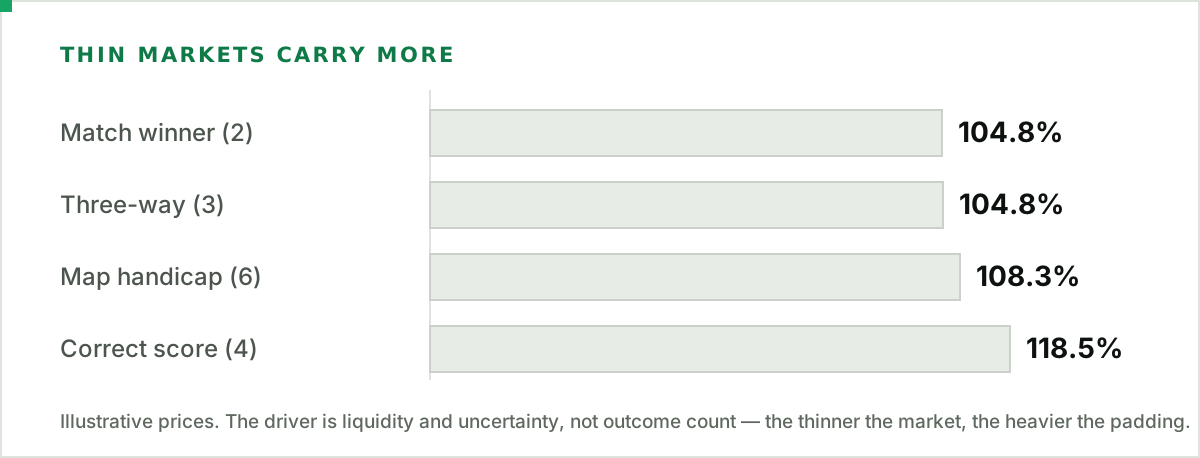
Those are illustrative prices, not measured markets. Note that the widest market here is not the one with the most outcomes: the four-way correct-score market carries more margin than the six-way. Outcome count is not the driver — liquidity and uncertainty are. A match-winner market on a big game is the tightest thing on the board because it is the most traded and the best understood; a correct-score market on the same game is neither.
The practical consequence: you cannot assume a market's margin, and you cannot compare two markets priced with different margins until you have removed it from each.
Margin and hold are not the same number
Two definitions, close enough to be conflated constantly and far enough apart to matter:
- Margin = booksum − 100%. On our example, 4.76%.
- Hold = margin ÷ booksum. On the same example, 4.55%.
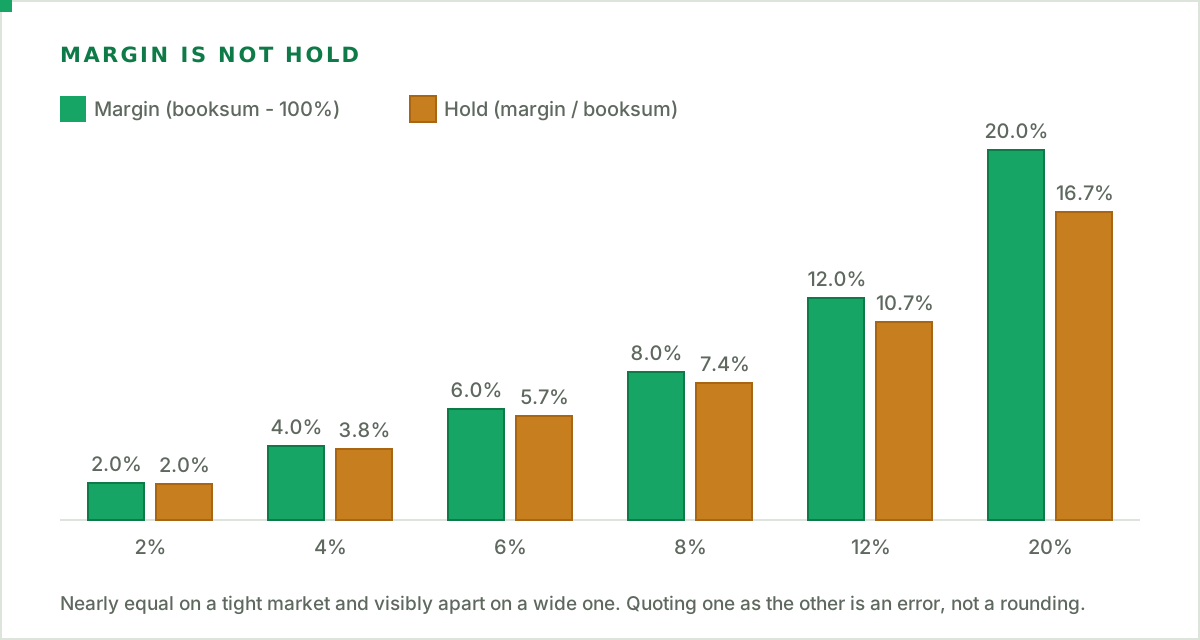
On a tight market they round to the same figure. On a wide one they visibly separate: a 20% margin is a 16.7% hold. Quoting one as the other is an error rather than a rounding, and it always overstates.
Because the margin is inside the price, a raw implied probability is always too high. If you are checking a market against a model, comparing raw implied probabilities compares your estimate against an inflated one — and the more lopsided the market, the more inflated. Remove the margin first.
Taking it back out
The fix is de-vigging: rescale the probabilities so they sum to exactly 100% again. The standard approach divides each one by the booksum, which takes our 52.38% back to a clean 50.00%. How to remove the vig from odds walks the arithmetic, and there are four different methods that disagree by a couple of percentage points on lopsided markets.
Once the margin is out, two markets priced by different sources with different margins can finally be compared like for like. That is the whole reason the step exists — and it is why the CS2 market line we publish is de-vigged before it is served, so the two sides sum to exactly 100.0000% rather than to whatever the contributing prices happened to add up to.