The vig — also called the overround or margin — is the amount by which a market's implied probabilities exceed 100%.
If the two sides of a match market imply 55% and 50%, the market sums to 105%. Those 5 percentage points are the vig. It is not a fee added on top; it is baked into every price, which is why reading odds naively overstates each outcome's chance. The word is short for vigorish, and bookmakers and exchanges rely on it as their built-in edge — the mathematics of bookmaking is essentially the study of how that margin is set and recovered.
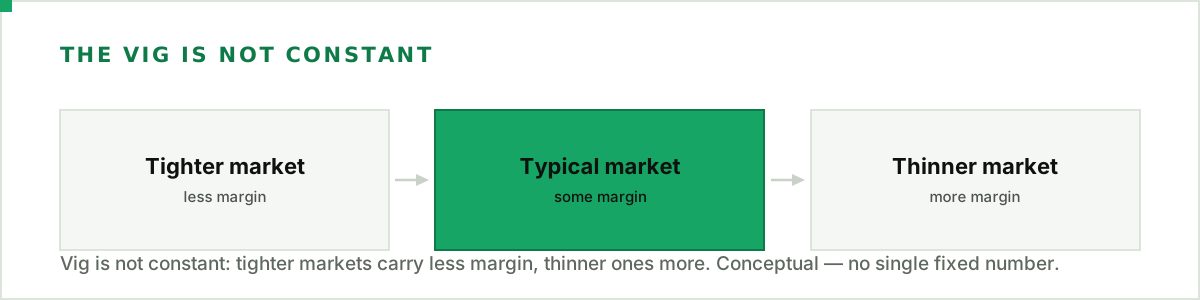
Vig varies. Tighter markets carry less of it, thinner ones more; in practice a busy two-way market runs a low single-digit margin, while a thin or exotic one can carry several times that. The reason is confidence and liquidity: a market a book is sure of, with plenty of money on it, can be priced tight, whereas an uncertain or thinly-traded one is padded more heavily to cover the risk. That variation is why implied probabilities from two different markets cannot be compared until the margin has been removed from each. Removing it is called de-vigging, and the result is the fair probability the market actually expresses, stripped of the house's cut.
EsportsOdds publishes a single de-vigged market line rather than raw prices. Across every live CS2 market, the de-vigged sides sum to exactly 100.0000%, the margin already taken out. How that is done — which sources feed the line, and how the margin is removed — is documented in the methodology.
See the vig explained for the full method, worked through with a real example.
Measure it on any market with the free vig calculator, which shows the overround, the margin, the hold, and which outcome is carrying it.