Bottom line: Every set of odds carries a hidden margin (the vig, or overround), which is why a market's implied probabilities sum to more than 100%. De-vigging removes it, rescaling the probabilities back to a true 100% so you're left with the market's genuine, fair estimate. It's the step that turns a raw price into an honest number, and it's the heart of the market line served by the EsportsOdds CS2 data API.
What the vig is
The vig (short for vigorish, also called the overround or margin) is the edge built into a set of odds. It's the reason the implied probabilities of a market don't add up to 100%: they add up to a bit more, and that surplus is the margin.
Take a match priced at 1.90 on each side. Each implies 52.6%, and together they sum to 105.2%, so this market carries a 5.2% vig:
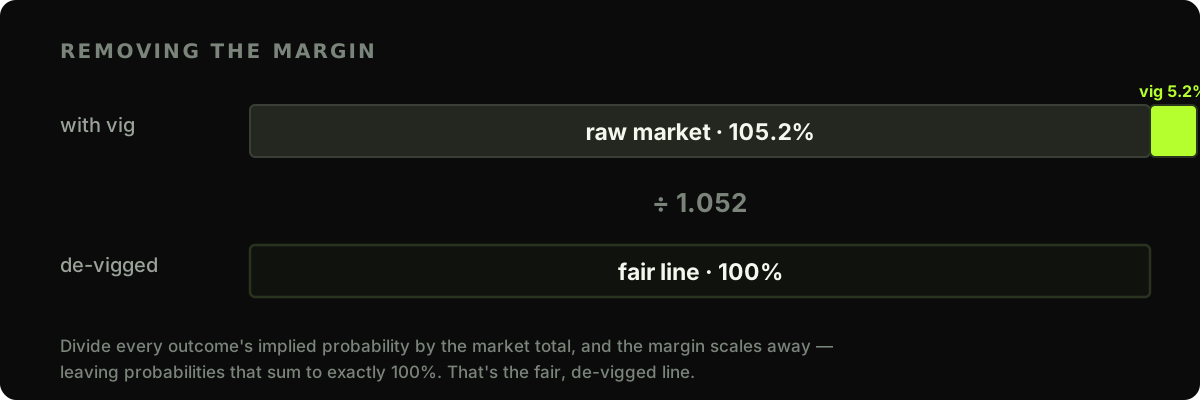
A tighter market might carry a 2% margin; a wider one 8% or more. The size of the vig tells you how much "padding" is in the price, and the whole point of de-vigging is to take it back out so you can see the fair probability underneath. Margins tend to be widest where a book is least certain: a thinly-traded market or an early line usually carries more padding than a popular match-winner market, because the book is charging for its own uncertainty as well as its edge.
How de-vigging works
The simplest and most widely used method is multiplicative (also called proportional or normalisation): divide each outcome's implied probability by the market total. Here's a worked example with an uneven market, Team A at an implied 60%, Team B at 45%, summing to 105%:
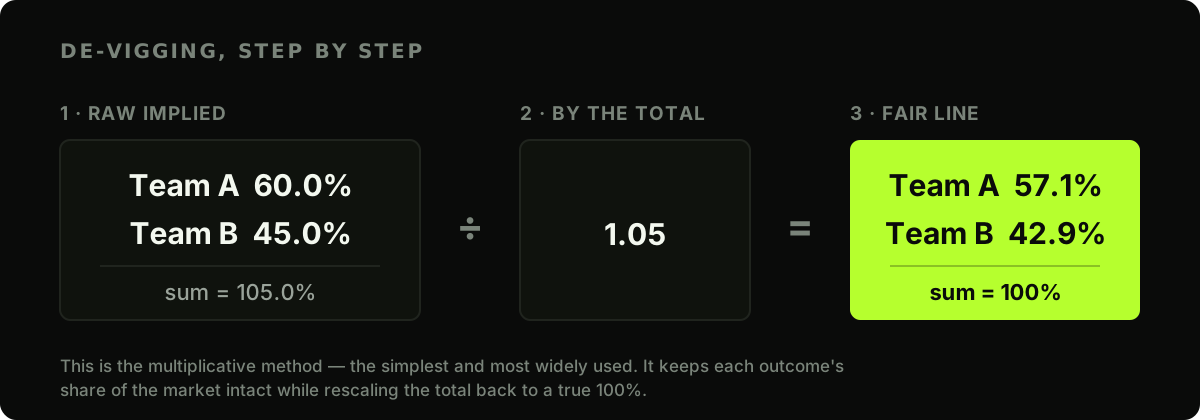
Divide each by the total (1.05) and you get 57.1% and 42.9%, which now sum to exactly 100%. Each outcome keeps its share of the market; only the inflated total is removed. That pair of numbers is the fair, de-vigged line.
There's a second common method, additive, which splits the margin equally across outcomes rather than proportionally. On the same 60/45 market it nudges the favourite slightly higher, to 57.5%, and the underdog to 42.5%:
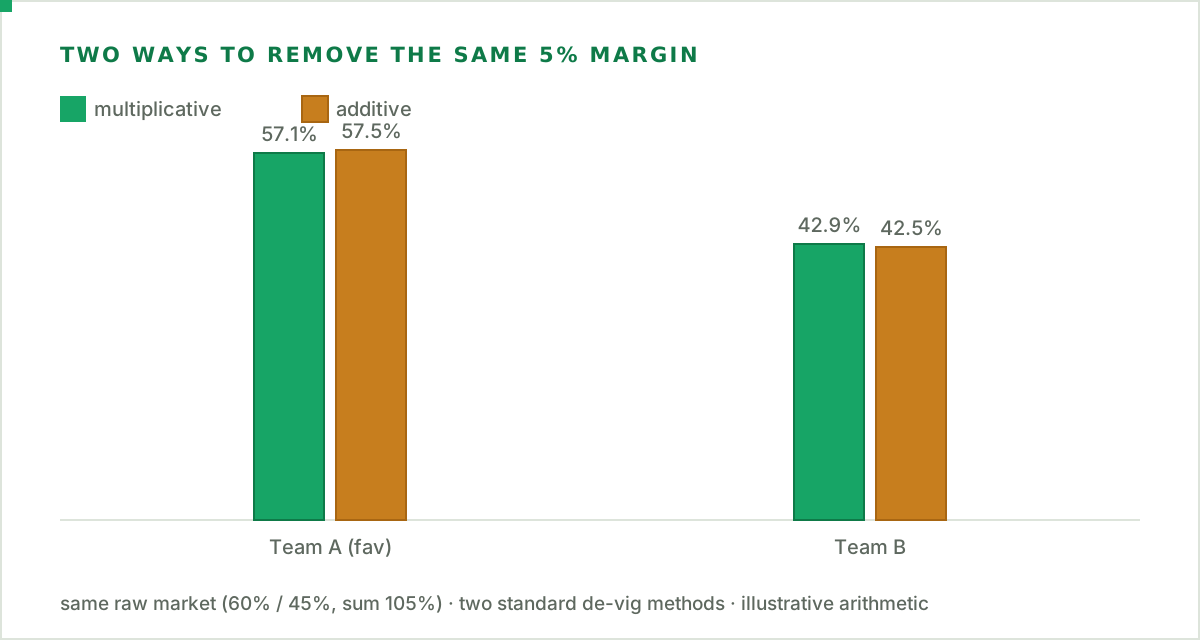
The two agree closely here, and both sum to 100%. Additive can be a better fit for lopsided markets and handles the favourite–longshot bias a little differently, but multiplicative is the standard starting point and is what most people mean by "no-vig" odds. Which method to use is a small but real modelling choice, one the forecasting literature has studied directly (for example Štrumbelj's 2014 comparison of de-vigging methods).
Why the fair line matters
A de-vigged probability is the honest one, the market's genuine estimate with the house edge stripped out. That makes it the right number for two jobs:
- Comparing the market to a model. If you have your own view of a match, you want to compare it against the market's fair probability, not a padded price. De-vigging puts both on the same footing.
- Measuring line movement cleanly. Concepts like closing line value (how a price moved between when you looked and when the match started) only make sense against de-vigged numbers, because otherwise you're measuring changes in the margin as well as changes in opinion. If you noted a fair 55% and the line later closed at a fair 60%, the market shifted five points toward that outcome after you looked. Measured on raw prices, part of that shift would just be the book widening or tightening its margin, which is noise rather than signal.
Neither of those is a tip or a recommendation — they're analysis. De-vigging is a data-cleaning step, the same way you'd normalise any other measurement before comparing it.
How EsportsOdds builds a de-vigged line
Doing this well across a whole match schedule is exactly what the EsportsOdds market line automates. Rather than trust a single source, it takes prices from multiple bookmakers and exchanges, de-vigs each one, and takes the median across them as the consensus, publishing one fair number with no individual source ever named:
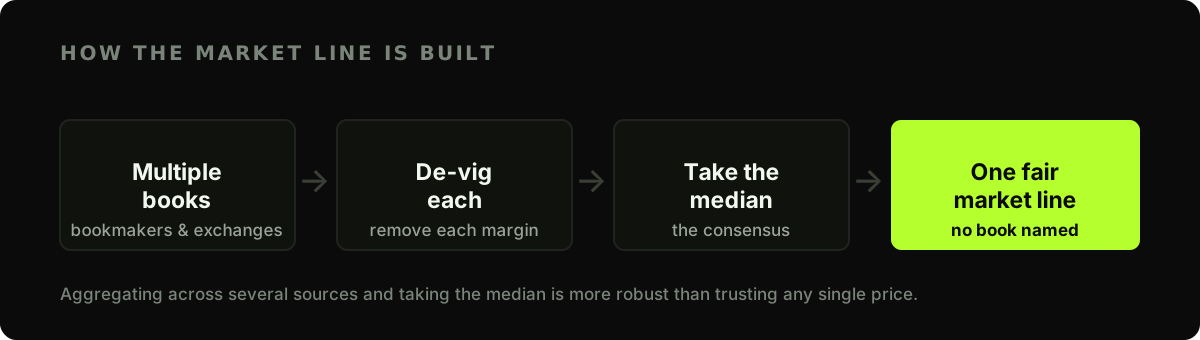
Aggregating across several sources and taking the median is more robust than de-vigging any single price: one source with a wide margin or a stale number can't skew the result. The output is a market-implied win probability you can pull as JSON on a flat $49/month plan, already de-vigged and ready to compare against your own model.
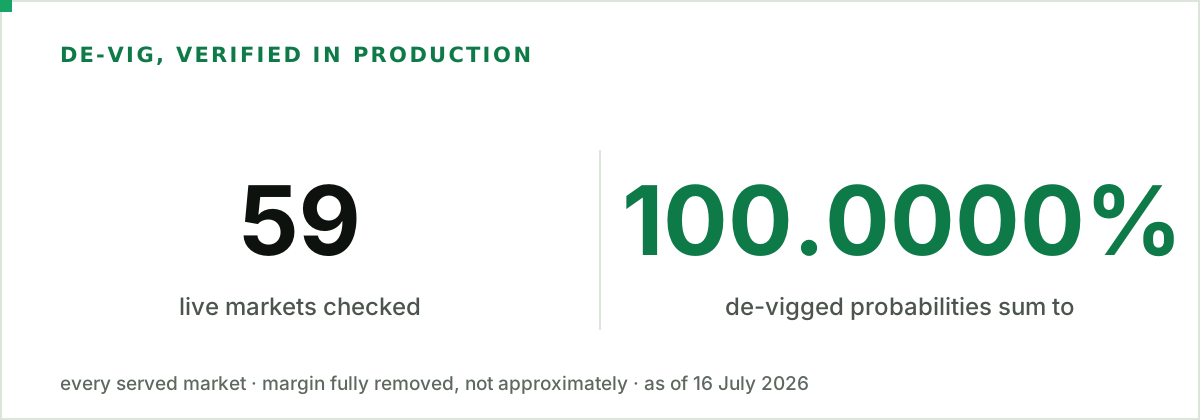
And it holds up in production. Across every open market we price, the de-vigged probabilities sum to exactly 100.0000%, not roughly 100%: the margin is fully gone, every time.
Once you understand the maths, reading the line itself is a single request. The guide to reading the CS2 market odds line via the API walks through the endpoint, the response shape, and how to turn it back into a probability.
The vig is the margin that makes a market sum to over 100%. De-vigging divides each outcome's implied probability by the total to rescale it back to 100%, leaving the fair probability. EsportsOdds does this across multiple sources and serves the median, no book named.
Frequently asked questions
What does "de-vig" mean?
De-vigging (or "no-vig") means removing the bookmaker's margin from a set of odds so the implied probabilities sum back to a true 100%, leaving the fair probability of each outcome. It's a standard data-cleaning step for anyone analysing markets.
What is the vig or overround?
The vig (vigorish), overround, or margin is the edge built into odds, the reason a market's implied probabilities add up to more than 100%. A 1.90/1.90 two-way market carries about a 5.2% vig.
How do you calculate no-vig odds?
The simplest way is the multiplicative method: convert each outcome to its implied probability, sum them, then divide each by that sum. For 60% and 45% (total 105%), the fair probabilities are 57.1% and 42.9%.
Is de-vigging the same as finding fair odds?
Yes. The de-vigged probabilities are the "fair" odds, meaning the odds with no margin. They represent the market's genuine estimate of each outcome's likelihood.
Where can I get de-vigged odds via an API?
The EsportsOdds CS2 data API serves a de-vigged market-implied win probability per match, aggregated as the median across multiple sources with no book named, on a flat $49/month plan. You get the fair number directly, so the only maths left on your side is comparing it to your own view.
Want to run the numbers yourself? The free no-vig calculator does exactly what this article describes, and compares all four de-vig methods on the same prices.
Cite this
EsportsOdds, "The vig explained: how de-vigging finds fair odds", 10 July 2026. https://esportsodds.gg/learn/devig-fair-odds