Bottom line: The CS2 economy is the layer beneath the aiming. Teams earn money for wins, kills and plants, and a rising loss bonus for defeats, then decide each round whether to eco, force or full-buy. Across 2,033,320 professional team-rounds in our data (as of 16 July 2026), a full buy wins 57.6% of rounds and a full eco just 30.1%. The twist: a broken light buy wins even less at 27.8%, so spending badly is worse than not spending at all. Every figure here is computed from the EsportsOdds CS2 data API.
The money system in one picture
Every player starts a round with money carried over from the last. You get paid for winning, for kills, for planting or defusing the bomb, and, crucially, for losing. The loss bonus is a net counter: it climbs each time you lose and drops each time you win.
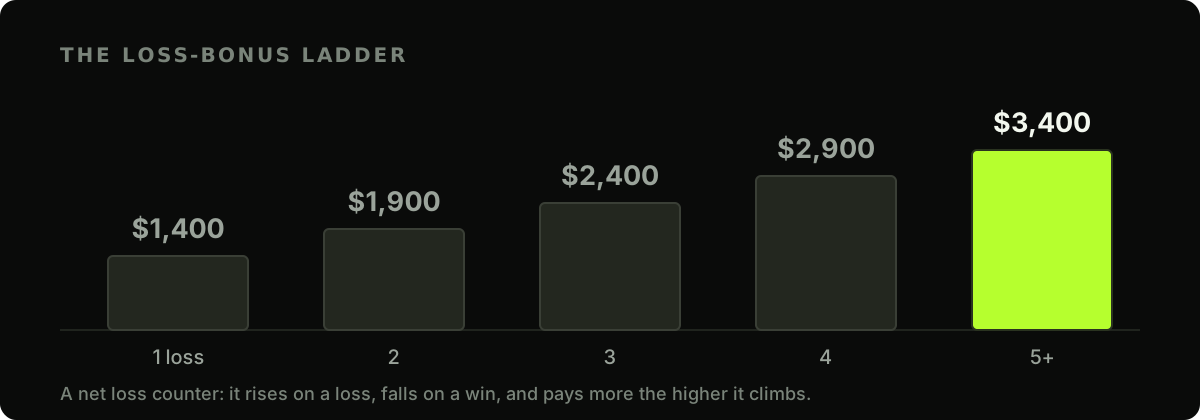
That rising ladder is Counter-Strike's comeback mechanic: a team on a losing streak is handed the money to fight back, which is why a 0-6 side can suddenly win six straight once its economy resets. Read it right and you can anticipate when a struggling team can next full-buy.
Where the loss-bonus numbers come from
One caveat matters for anyone modelling the economy: Valve has never published this ladder as an official table. The $1,400-to-$3,400 figures are the default values of the game's cash_team_loser_bonus server variable, observed in-game and documented by the community: a $1,400 base, rising $500 per consecutive loss, capped after five at $3,400. Valve ships balance changes through its CS2 patch notes, but these values have never appeared there. Treat them as stable observed defaults, not a design spec, since a competitive ruleset or patch could change them.
Eco, force, full: the three decisions
Every round, a team picks one of three broad plans based on what it can afford:
- Eco (save): buy almost nothing and concede the round on purpose so you can full-buy the next one. A disciplined save keeps everyone's pistols and armour intact.
- Force-buy: spend everything you have, often on SMGs, armour and a scattering of rifles, because winning this round matters more than saving. Common after a lost pistol.
- Full buy: rifles, armour, utility and a defuse kit for everyone. The default when the money is there.
The art is matching your buy to the opponent's: a force-buy into the enemy's full buy usually loses, but a force into their eco can steal a round and break their economy in one move.
Buying more wins more, but only if you commit
Group those two million pro team-rounds by how much a team actually spent, and the win rate climbs with the buy:
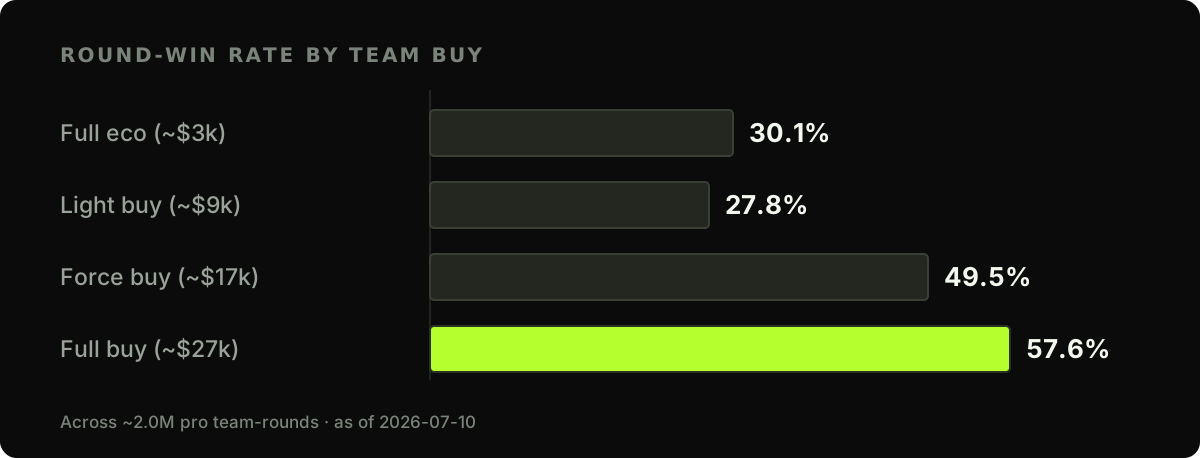
A full buy wins well over half its rounds, nearly double a full eco, so a healthy economy matters enormously. But more money does not always mean more wins, and that is where the economy gets interesting.
The broken-buy trap
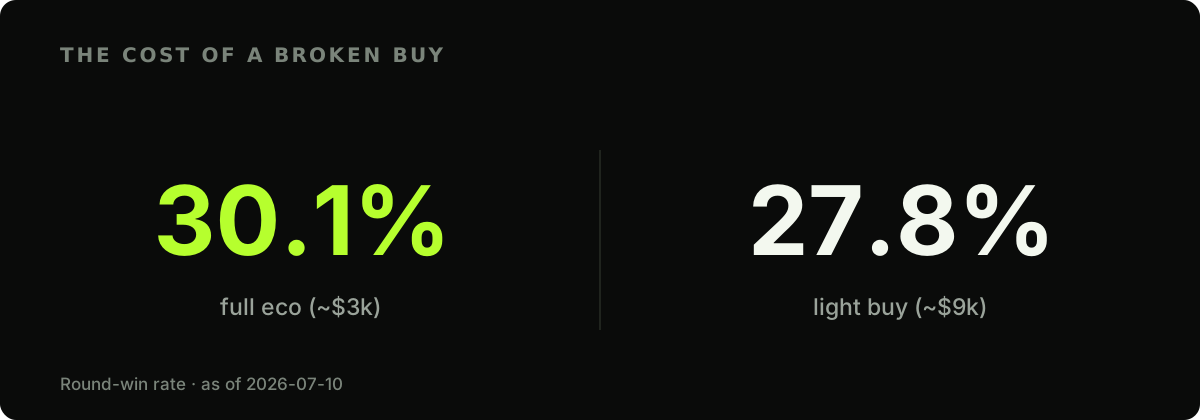
A full eco ($3k) actually wins slightly more often than a light, half-committed buy ($9k):
Line the spend up against the win rate and the trap is plain:
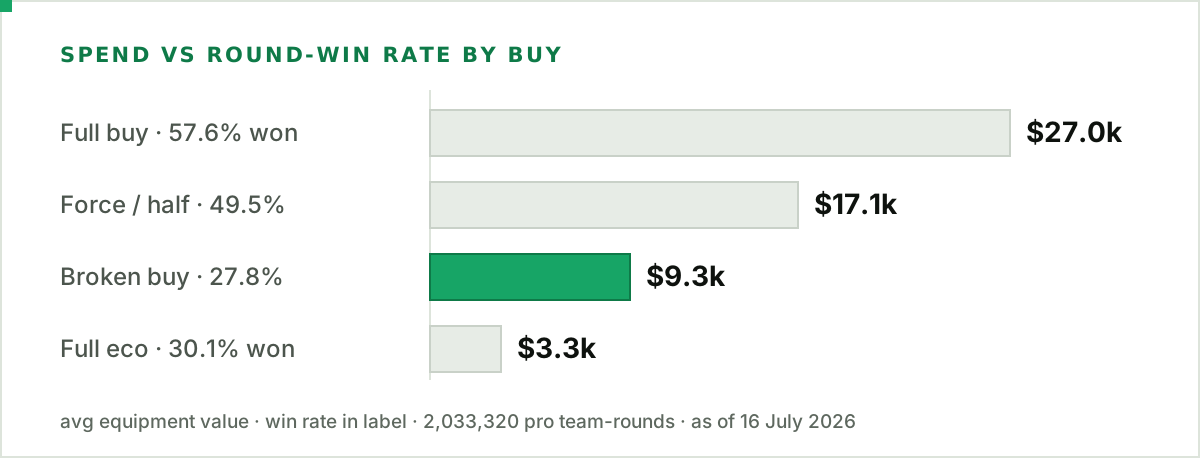
The broken buy pours nearly three times an eco's money onto the table and still wins less often. A half-buy gets the worst of both worlds: not enough firepower to win, and nothing saved for next round. A full save at least guarantees a proper buy, which is why disciplined teams save completely rather than throw a doomed light buy at a full buy. Spending badly is worse than not spending.
The pistol round: the economy's control
The economy's fingerprints are clearest on the one round where they vanish. The pistol round opening each half puts both teams on the same minimal buy, stripping money out of the equation:
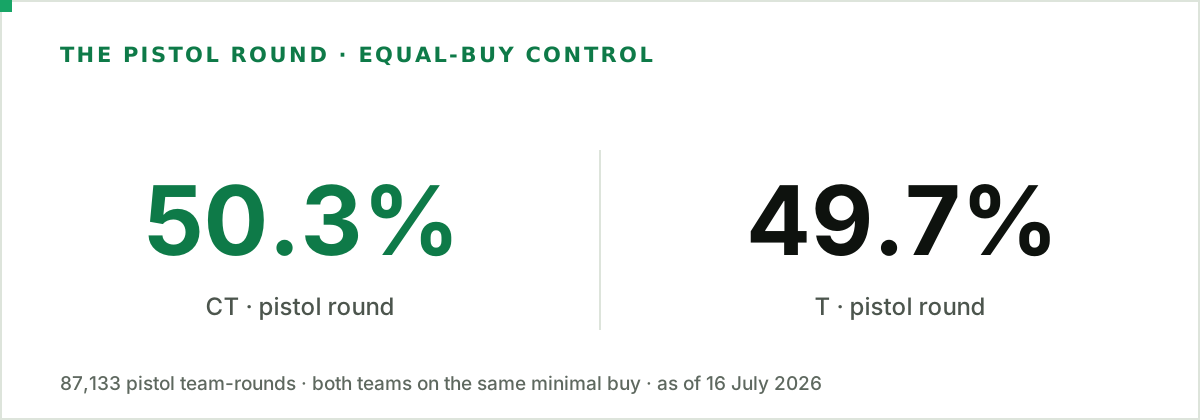
With equal economies the win rate collapses to almost exactly even: 50.3% CT, 49.7% T across 87,133 pistol team-rounds. A full buy, by contrast, wins 57.6% of its rounds. Much of that seven-point edge is a rough measure of what money itself is worth. It is also why the pistol is so pivotal: win it and the follow-up rounds its reward funds, and a team can snowball a 3-0 before the rifle rounds begin.
Reading the economy round-by-round
The interesting rounds are the ones that aren't full buys: the ecos, forces and anti-ecos. Knowing each team's likely buy is one of the strongest signals for how a round plays out, and it is derivable entirely from the round-by-round money and equipment data.
The EsportsOdds CS2 data API exposes that round detail: per-team economy, equipment value and outcome for every round. That makes an economy tracker, an eco win-rate model, or a buy-aware fantasy tool straightforward to build. Our methodology page documents how equipment value and buy type are classified.
Teams earn money for wins, kills, plants and a rising loss bonus, then eco, force or full-buy. Full buys win ~58% of rounds, full ecos ~30%. A broken light buy wins less than a full save: spend properly or don't spend.
Frequently asked questions
What is an eco round in CS2?
An eco is a round where a team deliberately buys little or nothing to save for a full buy next round. A disciplined save keeps pistols and armour intact and, in our data, wins slightly more often than a half-committed light buy.
What is a force-buy?
A force-buy is spending all available money, usually on SMGs, armour and some rifles, because winning the current round matters more than saving. It is most common after a lost pistol round, and wins about half its rounds depending on what the opponent buys.
How does the CS2 loss bonus work?
Losing a round pays a bonus from a net counter that rises when you lose and falls when you win. Its observed default values run from $1,400 to $3,400 (the game's cash_team_loser_bonus server variable, not an official Valve table). It is the comeback mechanic that lets a losing team rebuild and mount a run.
What percentage of rounds do full buys win?
About 57.6% across 2,033,320 pro team-rounds in our data, versus roughly 30% for a full eco. Buying more wins more, provided a team commits fully rather than half-buying.
Where can I get CS2 round and economy data?
Through the EsportsOdds CS2 data API: per-round, per-team economy, equipment value and outcomes as JSON. From those rows you can rebuild every buy-type win rate here yourself.
Cite this
EsportsOdds, "CS2 economy explained: eco, force-buy and the money system", 10 July 2026. https://esportsodds.gg/learn/cs2-economy