An eco round is a deliberate save — a team spends little or nothing so it can afford a full buy in a later round.
Counter-Strike's economy makes losing cheap in a specific way: the loss bonus escalates the more consecutive rounds a team drops, so a side that has just lost the pistol round is often better off saving than half-arming itself. The eco trades one round for a much stronger next one.
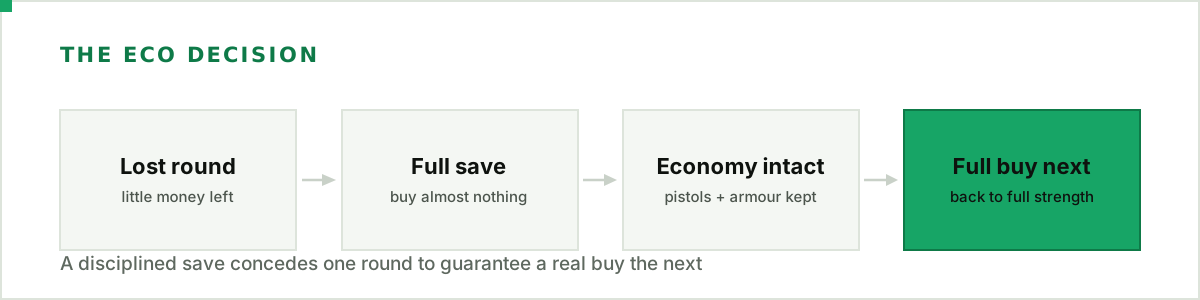
Why a disciplined eco is the sharper play shows up in the round-win rates. Across 2,033,320 professional team-rounds in our data, a full save wins 30.1% of its rounds — slightly more than a half-committed "broken" buy at 27.8%. Dribbling money into a doomed light buy gets the worst of both worlds: not enough firepower to win the round, and no bank saved for the next. A clean full save at least keeps everyone's pistols and armour for a genuine buy.
Ecos are not free. Losing one badly still hands weapons to the opponent, and a team that wins an eco swings the money game hard, because the loser now buys with a depleted bank. The exact loss-bonus figures, incidentally, are observed cash_team_loser_bonus convar defaults rather than numbers Valve has published — even Counter-Strike 2's launch notes don't spell them out.
How it is measured: an eco is not a flag on the data. You infer it from a team's equipment value going into the round, which the round-level data exposes per side, alongside the outcome. The counterpart is the force buy, where a team spends everything despite being short.
See the CS2 economy explained for how the loss bonus and the round-win rates by buy type actually behave.