A force buy is committing a team's remaining money to a round it cannot fully afford — SMGs, armour, or half a rifle each.
The logic is denial. If the opponent is one round from consolidating a strong economy, letting them roll uncontested may be worse than fighting under-equipped. Winning a force buy is doubly valuable: the round is taken and the opponent's loss bonus resets, undoing several rounds of their saving. The thresholds that make a force worthwhile shift whenever Valve retunes the money system in a CS2 update, so the tactic is always relative to the current economy.
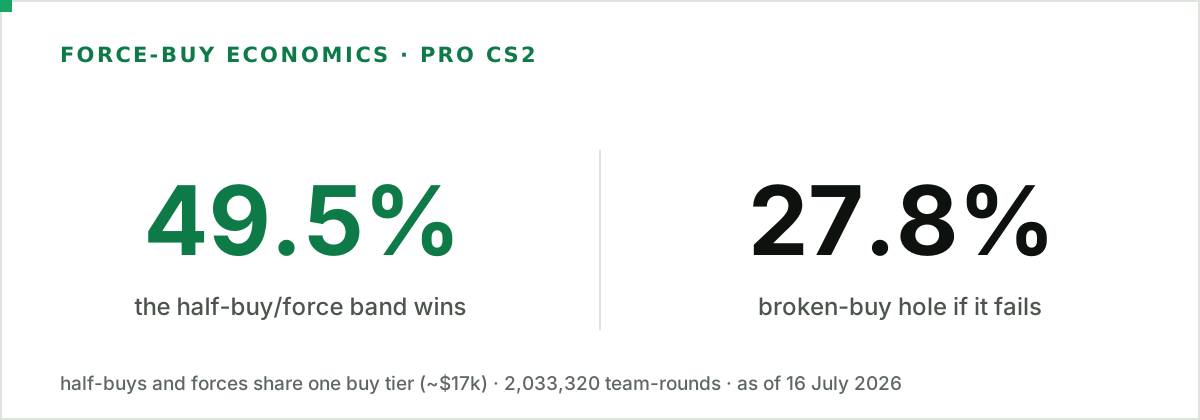
How well do forces actually do? Our data can't answer that cleanly, and it is worth being honest about why. The buy tiers we record group half-buys and forces into a single band — around $17,000 of equipment on average — which wins 49.5% of its rounds across 2,033,320 professional team-rounds. That 49.5% is the band's rate, not the pure force-buy rate; calling it "the force-buy win rate" would be false precision. What the data does show is a steep downside: lose a force and the team drops into the broken-buy tier, roughly $9,000 of half-committed equipment, which wins just 27.8%, and stays broke for at least two more rounds.
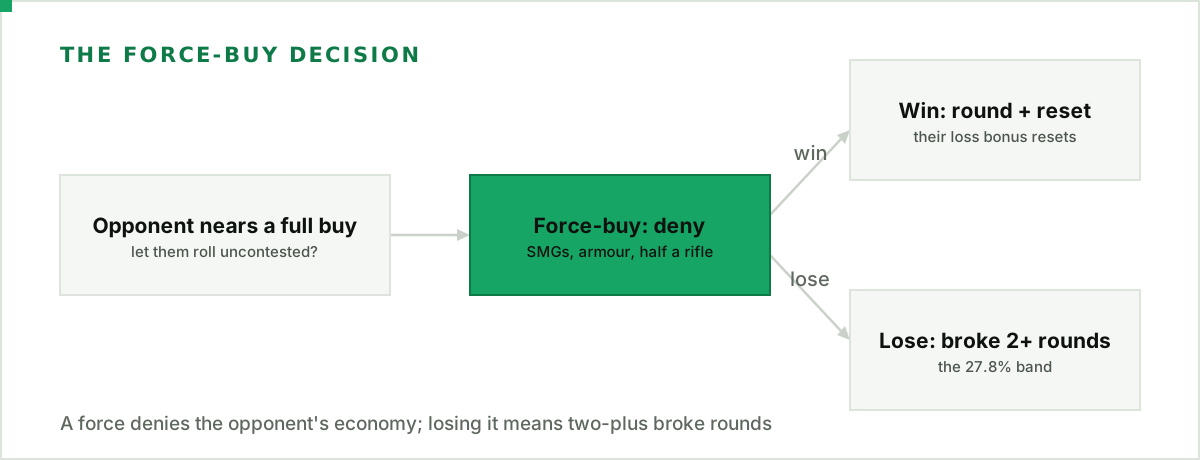
The read that matters is what the opponent is buying. A force into the enemy's full buy is usually a losing proposition; a force into their eco can steal the round and break their economy in a single move. That asymmetry is why coaches separate a genuine force from a panic buy, and why forces cluster at predictable moments: after a lost pistol round, and just before a side switch, when leftover money is worth less anyway.
How it is measured: like an eco, a force is not a flag. You read it from each team's equipment value going into the round. The disciplined alternative is the eco round; the two are the same economic decision seen from opposite ends.