ADR — average damage per round — is the total damage a player deals across a map, divided by the rounds played.
It is the cleanest measure of raw output in Counter-Strike, because it credits the damage that sets up a round even when someone else takes the kill. A player who reliably deals 70 damage before trading their life has still broken the opposing buy. Kill/death ratio hides that entirely.
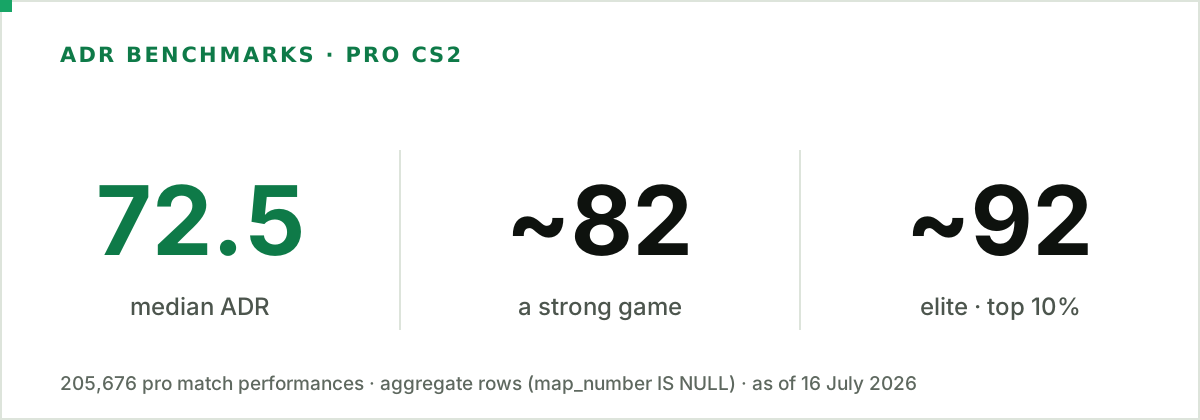
Across 205,676 professional match performances in our data (the per-match aggregate rows, one per player per match), the median ADR is 72.5. A strong game sits around 82, and an elite one clears 92. The distribution is close to a bell curve around that median, so a player stuck near 60 across a series is having a genuinely quiet time by professional standards, even if a couple of lucky rounds flatter their kill count.
Because ADR is a per-round rate rather than a total, it compares cleanly between a short 16-13 map and a long overtime, which a raw damage count cannot. How it is measured matters too: the API returns ADR per map and, separately, as a match aggregate; the aggregate is the row with no map number attached, so a leaderboard should read that rather than summing the per-map rows itself. Damage is also one of the inputs to a composite rating, which is why ADR tracks rating closely: HLTV's Rating 3.0 blends damage with survival, KAST and round impact into one figure.
Its blind spot is context. ADR does not know whether the damage came in a won round or a lost one, nor whether the player survived to use the advantage. A lurker farming damage in lost rounds and an entry fragger trading their life for space can post the same number and mean very different things to a team. That is why it is read next to KAST, the consistency stat, not on its own.
For the full distribution and the percentile benchmarks behind those numbers, see CS2 ADR explained.