Bottom line: Any set of odds is really a probability in disguise. Decimal odds of 2.50 mean the market is pricing an outcome as a 40% chance, because 1 ÷ 2.50 = 0.40. This guide covers how to convert decimal, fractional and American odds to an implied probability, and why the probabilities in a real market always add up to more than 100%. It's the foundation of the neutral, de-vigged market line served by the EsportsOdds CS2 data API.
What implied probability is
"Implied probability" is the chance an outcome would need to have for its odds to be fair. It's the single most useful thing you can extract from a price, and for decimal odds the formula could not be simpler:
implied probability = 1 ÷ decimal odds
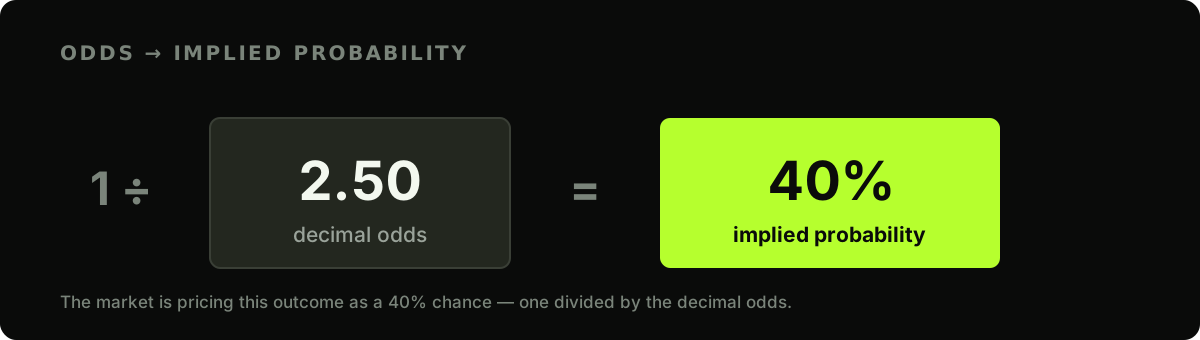
So decimal odds of 2.00 imply a 50% chance (1 ÷ 2.00), 1.50 implies 66.7%, and 4.00 implies 25%. Shorter odds mean a higher implied probability (the market thinks the outcome is more likely), and longer odds mean a lower one. That's the whole idea: a price is a probability estimate, expressed as a payout multiple.
The same rule, run across a ladder of odds, shows how steeply the two move together:
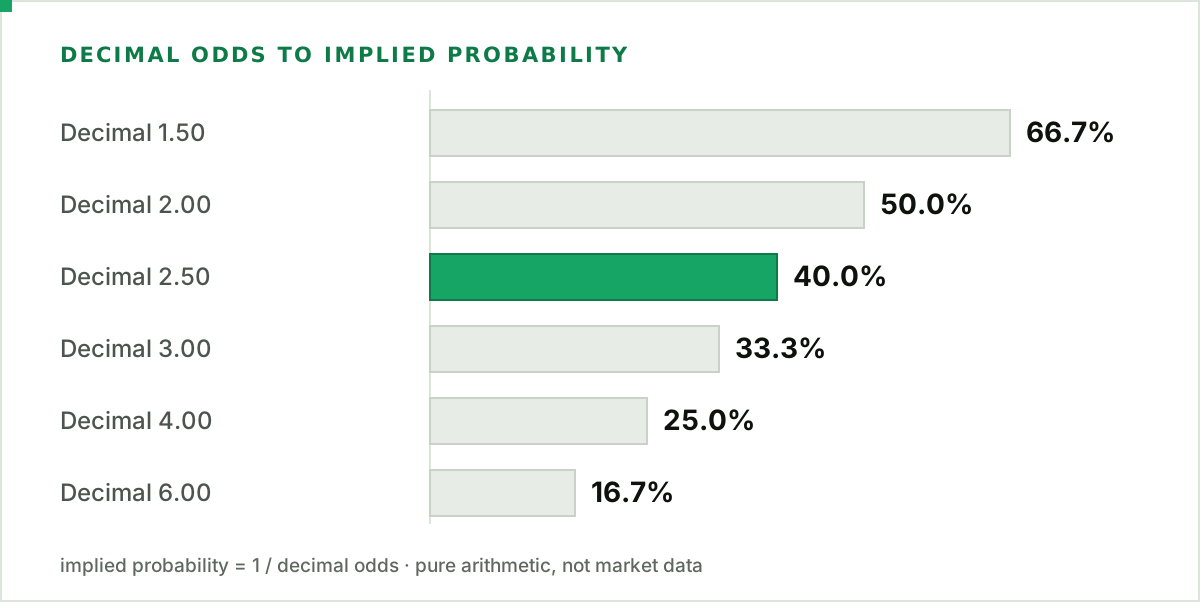
Reading down the ladder, each lengthening of the odds costs the outcome probability: even money (2.00) is a coin flip, while odds of 6.00 price barely a one-in-six shot. Nothing here is a forecast; it's pure arithmetic on the price.
The three odds formats
Odds come in three notations depending on where you are, but they all describe the same underlying probability. Here's a single 40% chance written three ways:
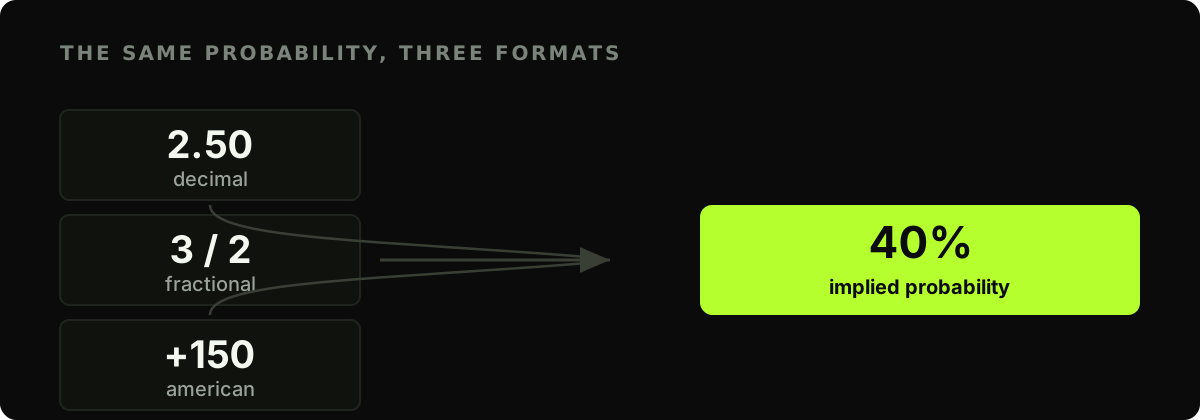
The conversions to implied probability:
| Format | Example | To implied probability |
|---|---|---|
| Decimal | 2.50 | 1 ÷ 2.50 = 40% |
| Fractional | 3/2 | denominator ÷ (numerator + denominator) = 2 ÷ 5 = 40% |
| American (+) | +150 | 100 ÷ (odds + 100) = 100 ÷ 250 = 40% |
| American (−) | −150 | odds ÷ (odds + 100) = 150 ÷ 250 = 60% |
The three notations are just conventions. American odds are written around a 100 unit: +150 returns 150 profit on a 100 stake (an underdog at 40%), while −150 returns 100 on a 150 stake (a favourite at 60%). Fractional 3/2 is that same 150-to-100 as a ratio. All three collapse to the same implied probability.
Decimal is the cleanest to reason about, which is why data providers and most of Europe use it, and why every price the EsportsOdds API returns is decimal. If you only remember one formula, remember 1 ÷ decimal odds.
Why a market sums to more than 100%
Here's the catch that trips people up. If you convert both sides of a two-way market to implied probability and add them, you don't get 100%, you get more. Take a match priced at 1.90 each way:
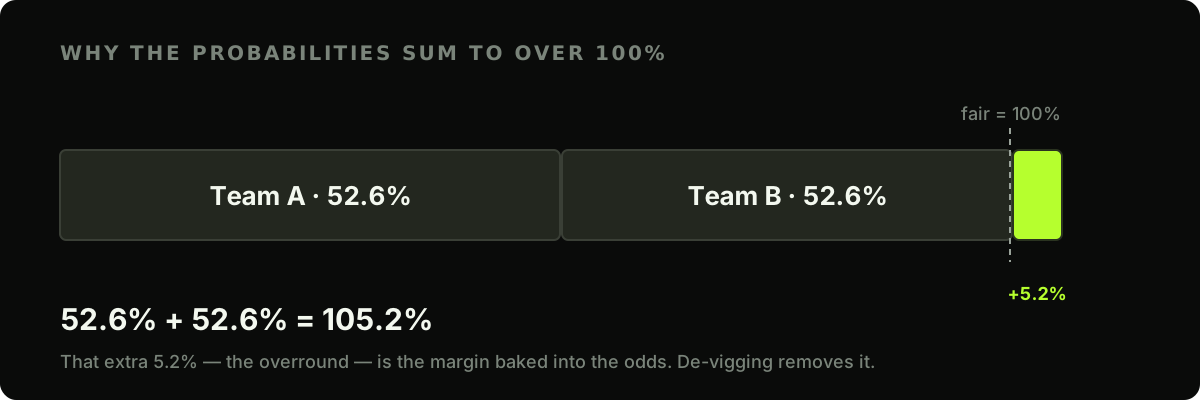
Each side of 1.90 implies 52.6% (1 ÷ 1.90), and 52.6% + 52.6% = 105.2%. Those probabilities can't both be true, since a match doesn't have a 105% chance of happening. The extra 5.2% is the margin (also called the overround or the vig): the built-in edge that makes the odds add up to more than certainty. The mathematics of bookmaking is the textbook treatment of exactly this overround.
This is why a raw price is not a fair probability estimate: it's a fair estimate plus a margin. To recover the market's true opinion, you have to strip that margin out.
From a raw price to a fair probability
Removing the margin so the probabilities sum back to 100% is called de-vigging, and it's a short enough step that it gets its own guide: the vig explained, and how de-vigging finds fair odds. The short version is that you divide each outcome's implied probability by the market total, so for the example above, 52.6% ÷ 1.052 = 50% each, a fair coin-flip.
That de-vigged, margin-free number is the honest one, the market's genuine estimate of how likely an outcome is. It's exactly what you want if you're comparing the market's view to your own model, or just want a clean probability to display. Reading that number back from the API is a single call, walked through in the guide to the CS2 market odds line.
How EsportsOdds uses implied probability
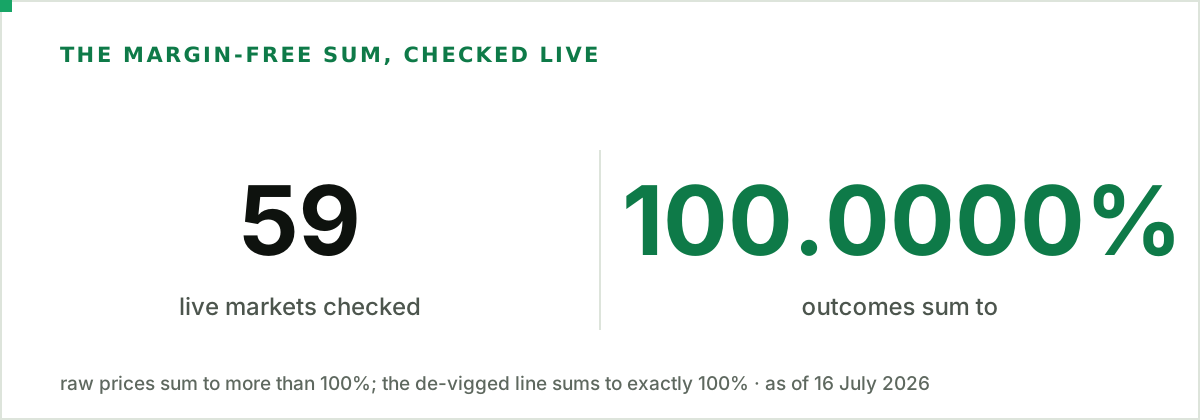
Turning prices into fair implied probabilities is the core of what the EsportsOdds market line does. Rather than serve a raw price from any single source, the API aggregates prices from multiple bookmakers and exchanges, converts each to an implied probability, removes the margin, and publishes a single market-implied win probability, with no individual source named. You get one clean number per outcome, delivered as JSON on a flat $49/month plan, instead of a raw price you'd have to de-vig yourself.
That the margin really is gone isn't a promise you have to take on trust. Across every open market we price, the implied probabilities we publish sum to exactly 100.0000%:
Implied probability = 1 ÷ decimal odds. Decimal 2.50 means a 40% chance. A real two-way market sums to more than 100% because of the built-in margin; strip that out (de-vig) to get the fair probability.
Frequently asked questions
How do you convert decimal odds to a percentage?
Divide 1 by the decimal odds. Odds of 2.50 give 1 ÷ 2.50 = 0.40, or a 40% implied probability. Odds of 2.00 give 50%; odds of 4.00 give 25%.
What is implied probability?
It's the probability an outcome would need in order for its odds to be fair: the market's estimate of how likely the outcome is, read straight off the price. It's the most useful thing you can extract from any set of odds.
Why do implied probabilities add up to more than 100%?
Because of the margin (the overround or vig) built into the odds. Each price carries a small edge, so summing the raw implied probabilities of every outcome gives a total above 100%. Removing that margin is called de-vigging.
How do you convert American odds to implied probability?
For positive odds: 100 ÷ (odds + 100), so +150 is 100 ÷ 250 = 40%. For negative odds: odds ÷ (odds + 100), so −150 is 150 ÷ 250 = 60%.
Where can I get implied probabilities via an API?
The EsportsOdds CS2 data API serves a de-vigged, margin-free market-implied win probability per match, aggregated across multiple sources with no book named, on a flat $49/month plan. The conversion is already done, so you read a probability, not a price to untangle.
To convert a price without doing the arithmetic by hand, use the free implied probability calculator.
Cite this
EsportsOdds, "How to convert odds to implied probability", 10 July 2026. https://esportsodds.gg/learn/implied-probability