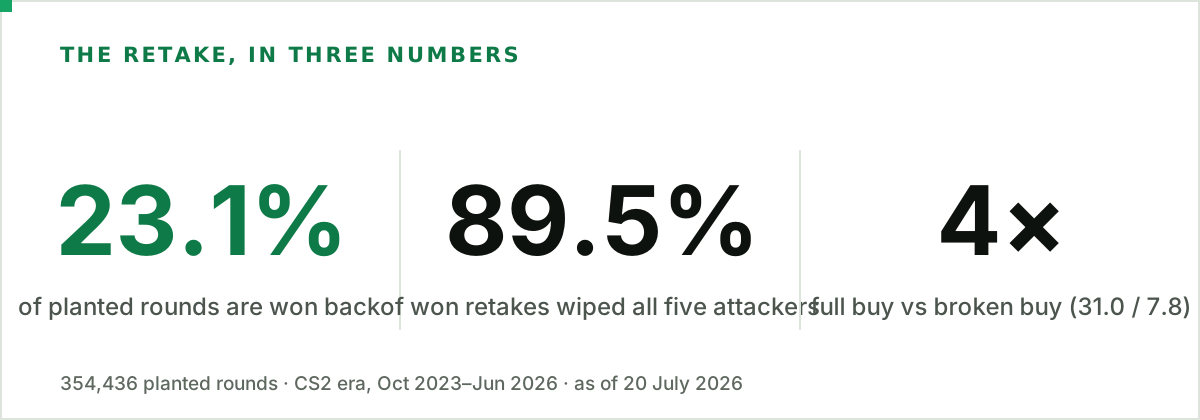
Bottom line: The retake is slowly becoming a better play. Across 354,436 planted professional rounds, "they can still retake this" comes true 23.1% of the time, but that number is creeping up on almost every map at once, and not because teams try harder: CT sides simply arrive at the plant richer every year. Underneath the drift, the fundamentals hold: a broken-buy CT side retakes 7.8% of plants while a full buy converts 31.0%, nine in ten successful retakes require killing every single attacker, and Vitality leads tier-1 while the reigning Esports World Cup champions sit dead last. Every figure is computed from the EsportsOdds CS2 data API as of 20 July 2026.
The retake meta: nobody saves more, everybody arrives richer
Track each map's retake rate from the first CS2 year to the most recent and the same thing shows up almost everywhere:
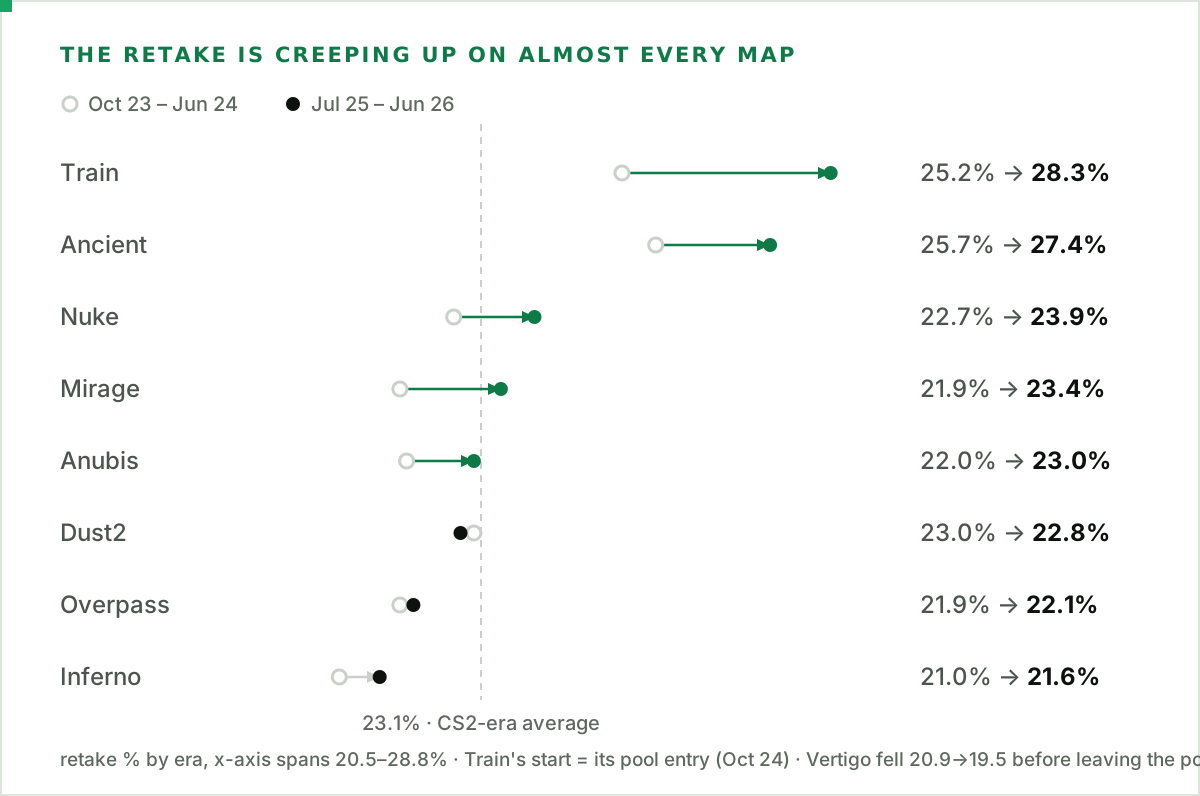
Train (+3.1), Ancient (+1.7), Mirage (+1.5), Nuke (+1.2) and Anubis (+1.0) all got measurably easier to retake, the rest held flat, and the era's only decliner, Vertigo, fell from 20.9% to 19.5% and then left the pool. When every map moves the same direction at once, the cause is not map design. It is the game around the maps.
It is not behaviour either. In lost planted rounds, the share where three or more CTs survived to the buzzer, which is what a deliberate save looks like in round data, has been parked at 8-9% for ten straight quarters: pro CTs still contest roughly nine in ten of the planted rounds they go on to lose, dying 4.3 men deep on average. (One caveat on the proxy: deaths span the whole round, so a round lost 3v5 before the plant reads as commitment here; the level is approximate, but the flatness is the finding.) There is no emerging save meta. The economy data says what actually changed:
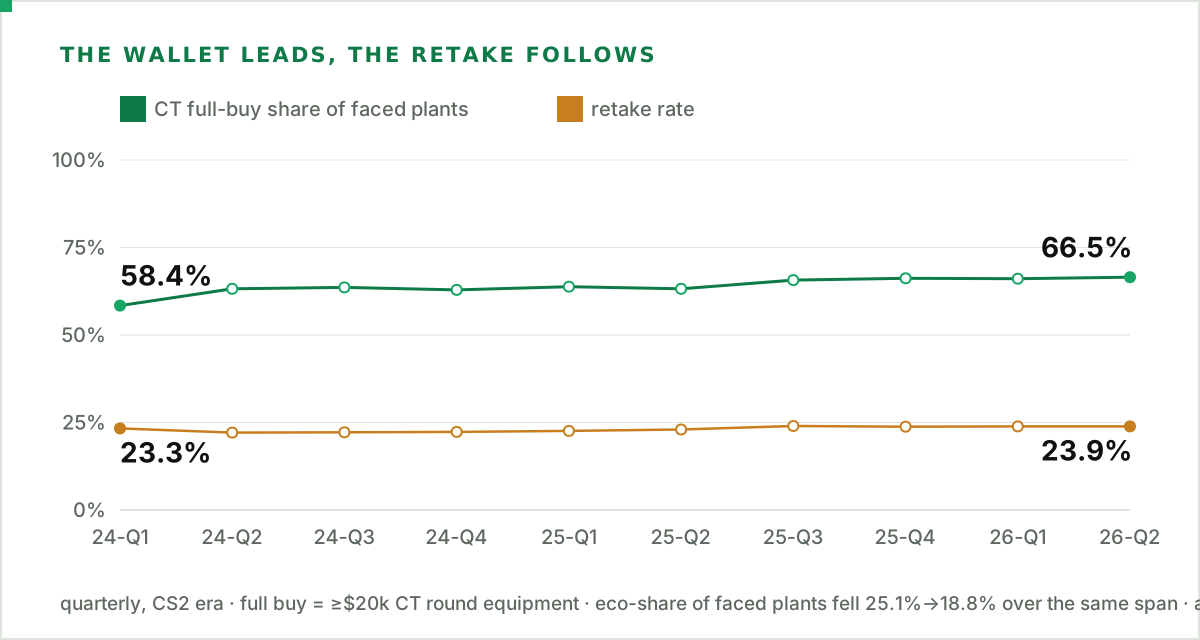
The share of planted rounds where the CT side held a full buy has climbed from 58.4% to 66.5% since early 2024, while eco-gear plants fell from 25.1% to 18.8%. Pro Counter-Strike is steadily getting richer at the moment of the plant, most plausibly better buy discipline and loss-bonus management spreading through the scene, and since full buys retake at 31% and broken buys at 7.8% (the economy section below shows why), the average follows the wallet. Composition is only half the story: at equal money, conversion also improved, with the full-buy bucket up about a point and ecos up about two since mid-2025. The retake meta is not heroics or new tactics visible at this altitude. It is money management, compounding a fraction of a point at a time.
The map ladder is a seven-point band
The drift is real, but the map spread it plays out on is small:
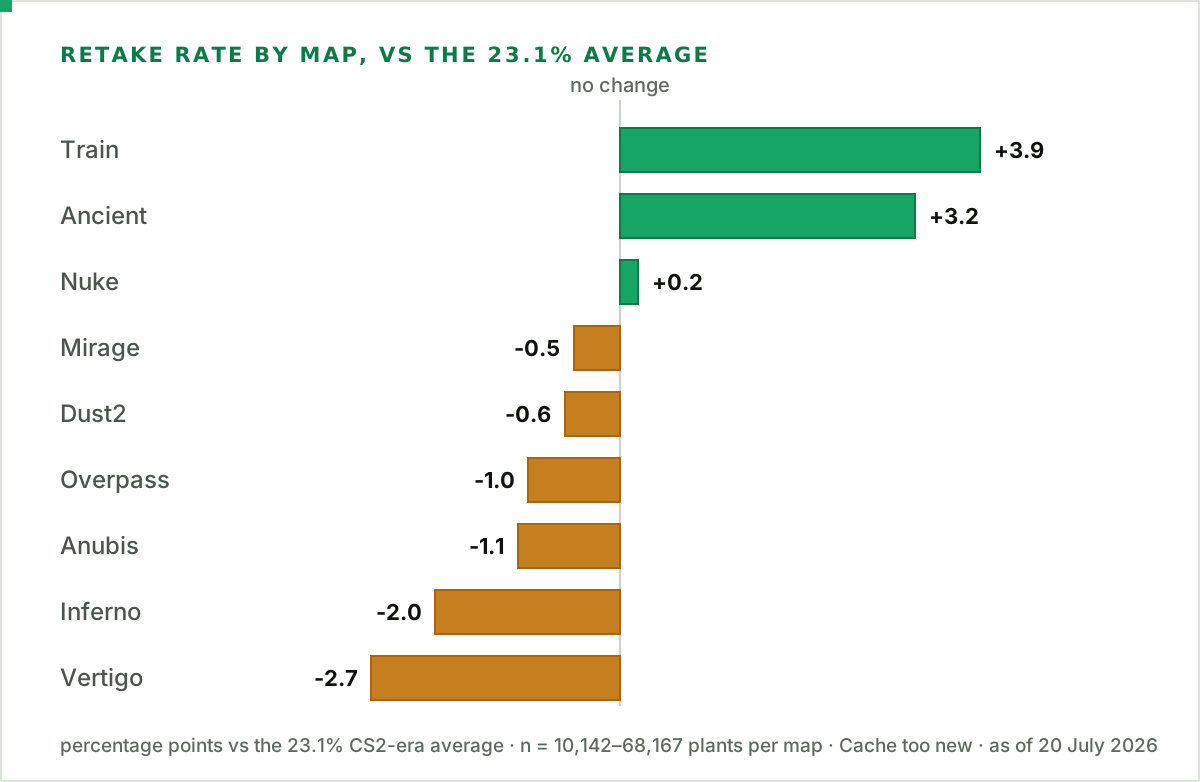
No map escapes the gravity of the number: across the whole CS2 era the entire pool lives between 20.4% (Vertigo) and 27.0% (Train). Train and Ancient, the pool's two most confined bombsite layouts, are the only maps where the retake clears one-in-four. But hold the theory loosely: Nuke has the fastest rotations in the game and sits at a dead-average 23.3%, so tight sites alone do not buy you retakes. Whatever the mechanism, the spread is small; which map you are on moves the retake far less than what you are holding when the bomb drops.
Plant frequency adds the other half of each map's character. Anubis Ts get the bomb down in 60.6% of rounds, the most in the pool, and CTs win back only 22.0% of those; that combination, not raw side win rate, is what "T-sided" feels like in practice. Ancient is the opposite: plenty of plants (57.0%) but the pool's second-best retake rate, so its rounds stay live longer than anywhere else. Overpass, at just 47.4% plants, was the hardest map to plant on right up until Season 5 retired it.
One square is one percent
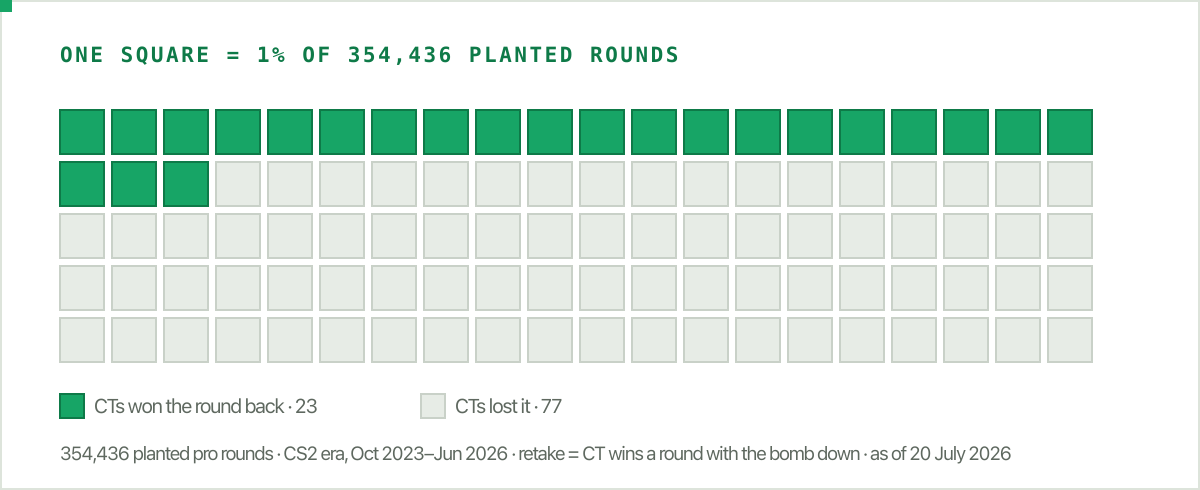
Behind all of this sits the baseline. Our dataset holds a team-level record of 657,031 professional CS2-era rounds: who planted, who won, what both sides were carrying. The bomb goes down in 53.9% of them. Here is what happens next:
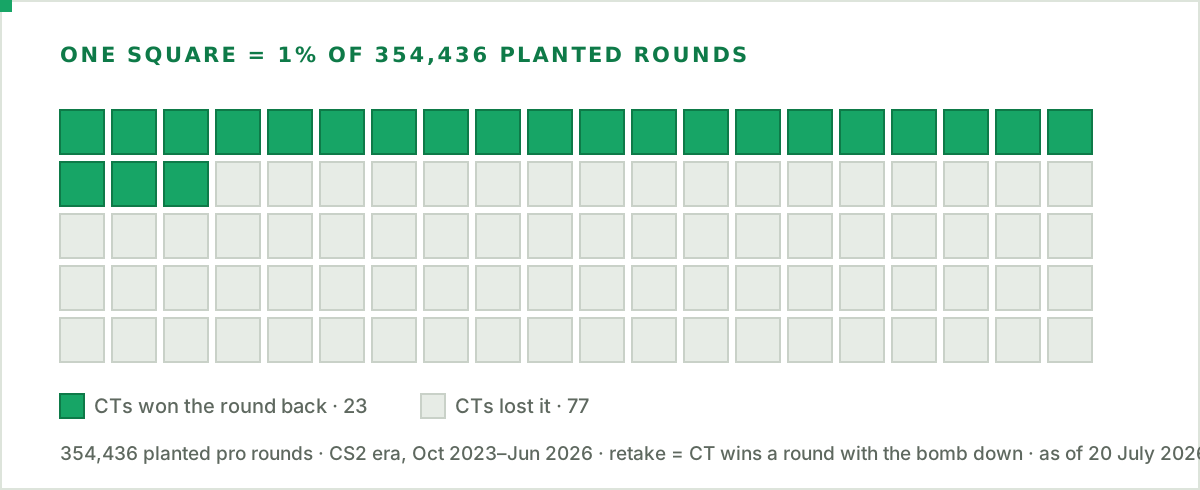
Commentary treats the post-plant as live drama, and the tension is real; the odds are not even. Once the bomb is planted, the CT side is losing roughly four rounds in five. A retake is not the expected outcome of a plant. It is the upset.
One honesty note before going further, because it is the first thing a sharp reader should ask: plants are not random events. Terrorists plant when the round is already going well, after winning an opening duel or taking map control, so 23.1% measures conversion after that selection, not the causal value of planting. It is still the CT's real-world menu: when the plant goes in, this is the distribution you are living in.
The broken-buy valley
The biggest lever on a retake is not the map. It is money:
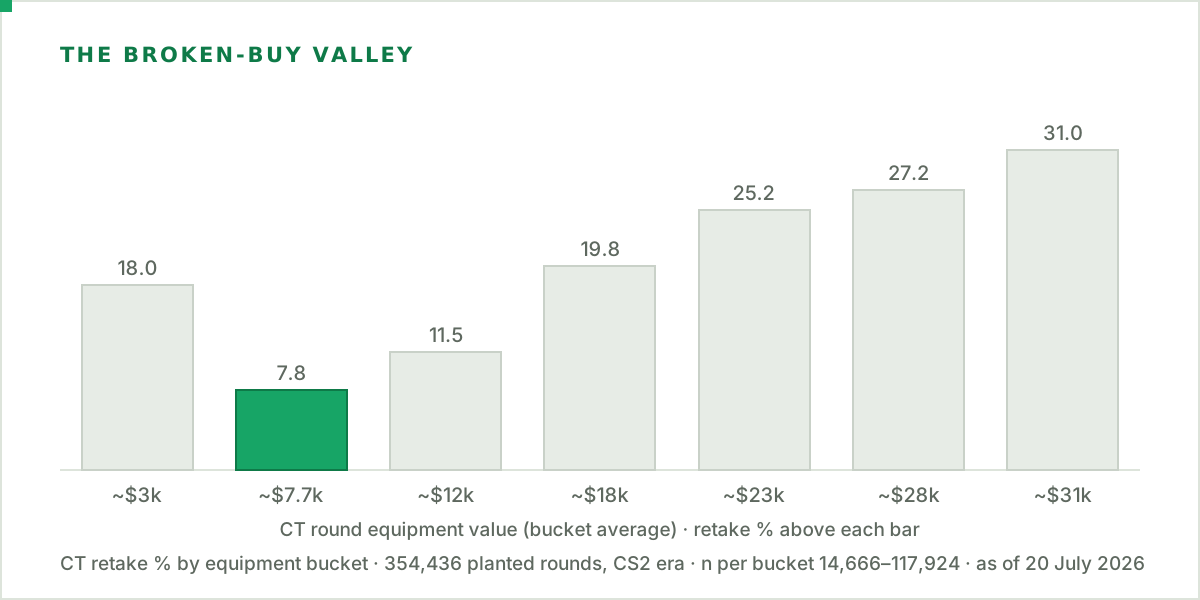
Read from the left: pistol-level equipment retakes 18.0% of plants, because in round one both teams are poor. Then comes the valley. At around $7,700 of team equipment, the classic broken buy, the retake rate collapses to 7.8%, because those CTs are saving pistols into a T side that kept its rifles. From there the curve climbs monotonically to 31.0% at full buys, four times the valley.
That framing still only shows one side's wallet, so here is the full picture, both economies at once:
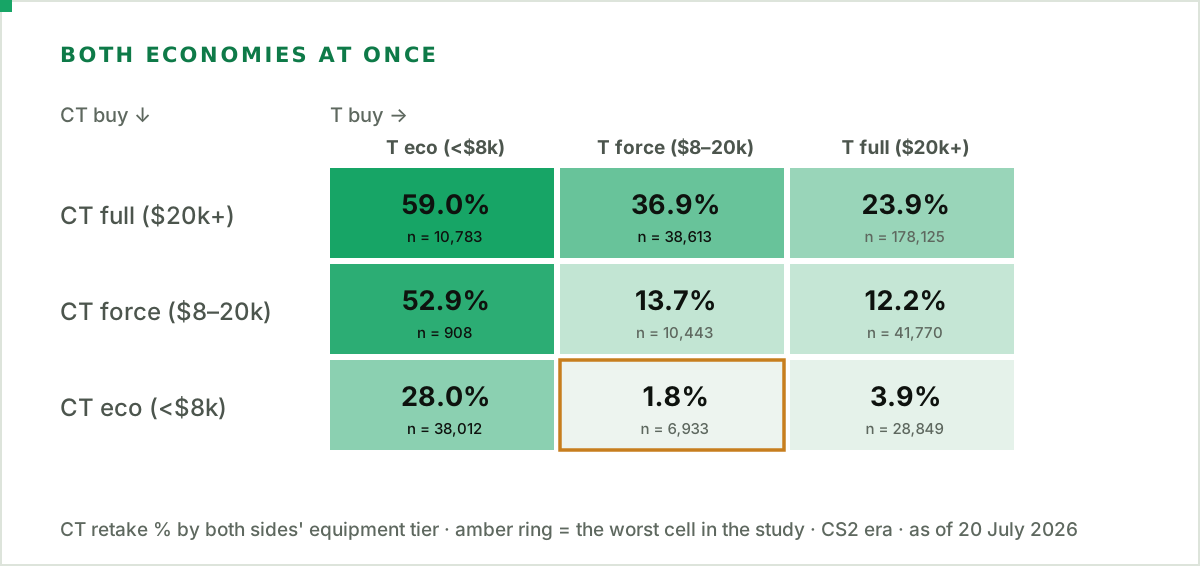
The grid is the whole retake economy in nine numbers. When both sides are broke, the retake runs above average (28.0%). Full-buy CTs against a T eco convert 59.0%, the only cell where the retake is the favourite. Full-against-full lands at 23.9%, almost exactly the overall average, which says the famous 23% is not an artifact of mismatched buys; it is what the retake is worth on a level field. And the ringed cell is the round you already know is lost when you hear it called: CTs saving into a T force buy retake 1.8% of those plants. When a casting desk says "no chance on this retake, they have nothing," that is the one version of the cliché the data endorses without qualification.
A retake is an ace-or-nothing job
How does a successful retake actually happen? Not the way highlight reels suggest:
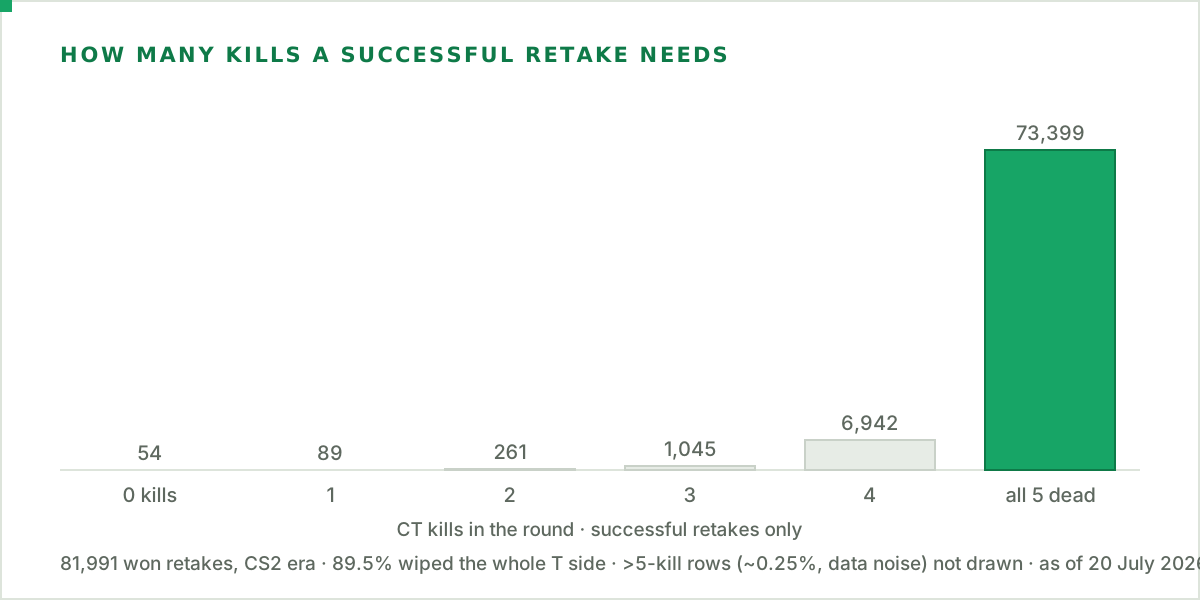
In 89.5% of successful retakes, every single attacker died; add the four-kill rounds and you are at 98%. The sneaky low-kill defuse, the one that headlines highlight reels, is around 2% of retake wins, which makes it roughly four planted rounds in a thousand. (Kills here span the whole round, so a T who fell before the plant counts toward the wipe.) A won retake is not cheap either: the average successful one still spends 2.85 CT lives. And a rules note, so nobody mistakes it for a finding: winning a planted round requires the defuse; killing all five attackers and watching the bomb tick out is still a loss, which is exactly why the retake is an all-or-nothing play with no partial credit.
Every tier-1 team, ranked
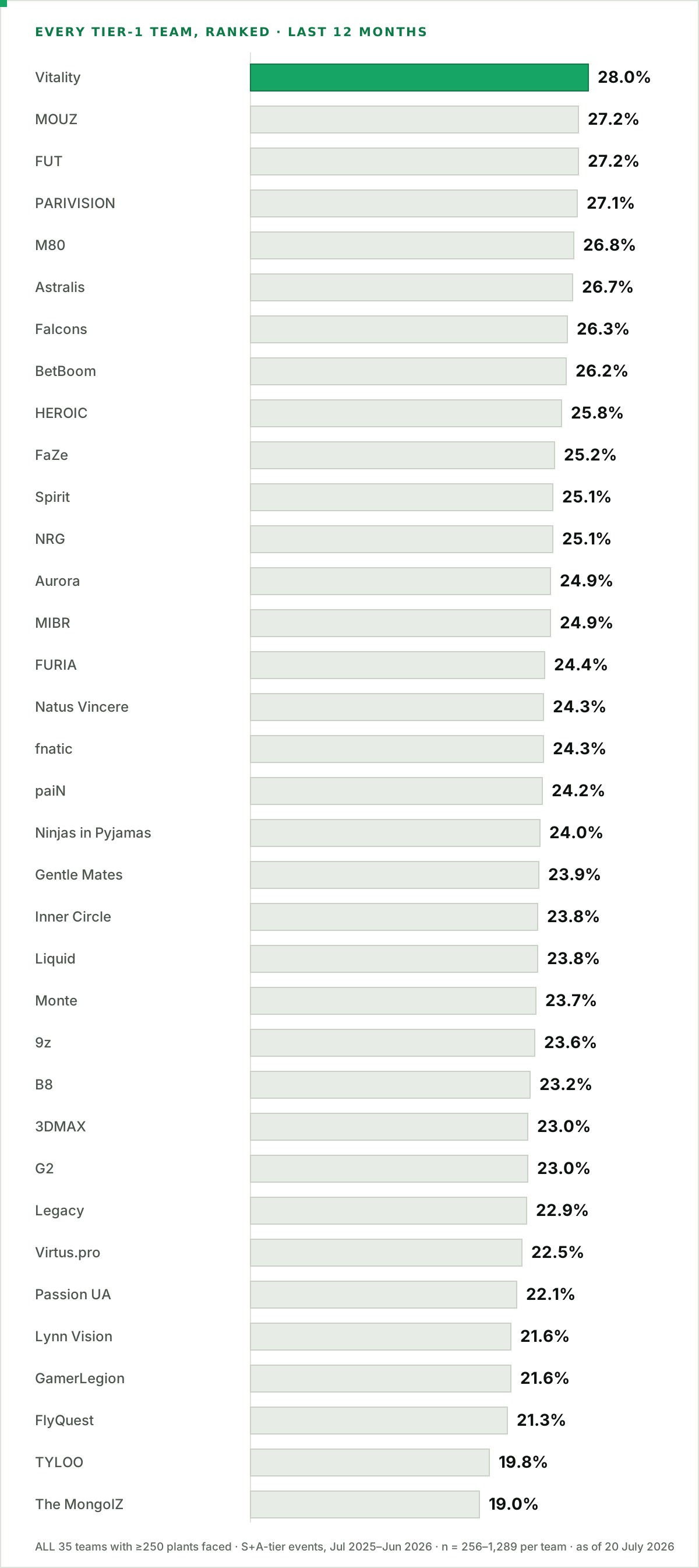
Across S and A tier events in the last twelve months (every team with at least 250 plants faced, no omissions), Vitality leads the world at 28.0%, which will surprise nobody who has watched ZywOo hold a collapsing site together. MOUZ, FUT and PARIVISION cluster just behind; Falcons, the Cologne Major champions, sit seventh; NAVI and G2 live mid-table.
The bottom is the conversation starter. The MongolZ, the defending Esports World Cup champions, are tier-1's worst retaking team at 19.0%, nine points behind Vitality. Over the ~1,000 plants a team faces in a year, nine points is roughly ninety rounds, about one converted retake per series of daylight between the best and worst. That gap is not simply a weakness: bLitz's side builds its defence on aggression and map control from 910 and mzinho, winning rounds before the plant and conceding the ones that get past it. But it is a real stylistic fault line, now with a number attached.
Season 5 just aimed a patch at the bomb itself
Keep the meta drift from the top of this piece in perspective: it is fractions of a point per quarter, and on the full scale the line barely breathes:
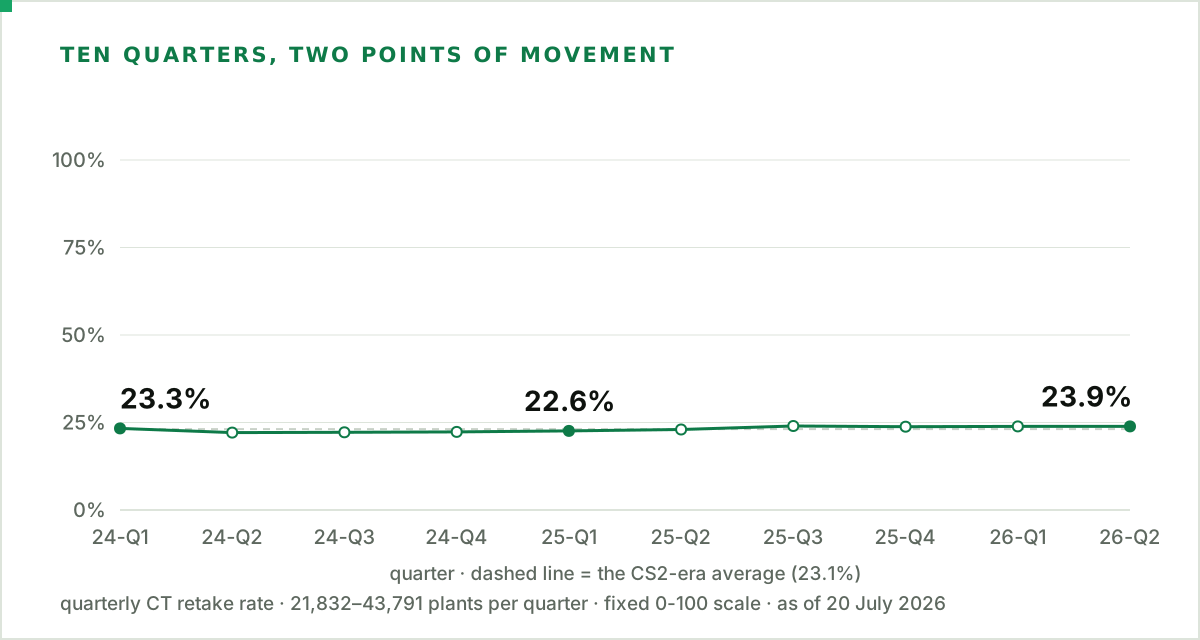
Ten quarters inside a two-point band, through map rotations and a reload update that rewrote the game's weapon economy. Then, on 9 July, Valve's Season 5 update reworked the C4 explosion from an instant, map-wide damage event into a shockwave that propagates outward from the site, dissipates around corners and no longer passes through walls, with a health-bar preview showing whether you would survive the blast. It also returned Cache to Active Duty in Overpass's place. For the first time in the CS2 era, a patch touches post-plant play directly: the shockwave changes who survives a detonation, and therefore how saves and last-second defuses are played.
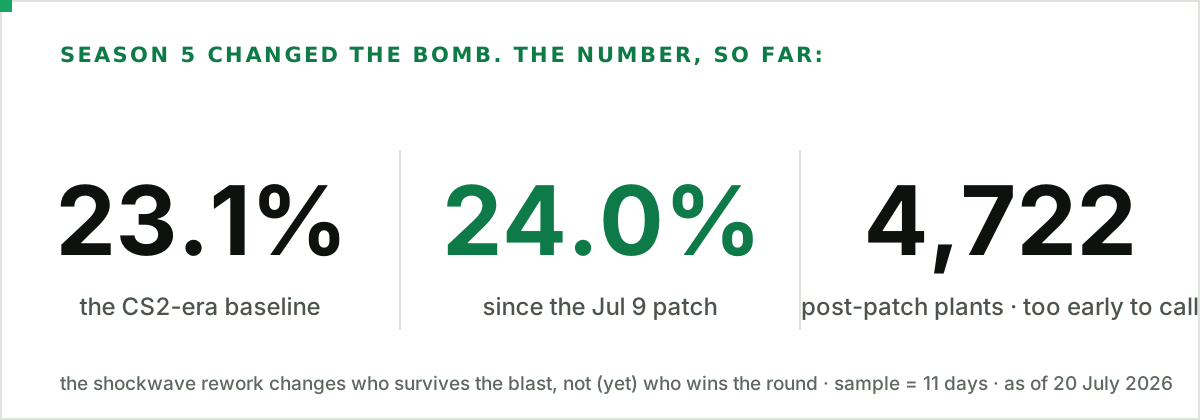
Eleven days in, the retake rate sits at 24.0% across 4,722 plants, within noise of the baseline, and our ingest for the current month is still filling in, so treat this as a marker laid down rather than a verdict. Given the rate shrugged off the far larger reload update, the honest prior is that it holds.
The verdict
What this data cannot see matters: it is team-level round data, so bomb sites (A versus B), player positions, utility usage and 1vX states inside the retake are invisible without demo parsing. That is the layer where individual "retake ability" would properly live.
What it can see is enough to retire the cliché. The retake is the most narrated play in Counter-Strike and one of its least successful: one planted round in four, moved less by the map than by money, and won almost exclusively by killing everyone. The next time it matters starts 12 August in Paris, where the Esports World Cup opens with the defending champions holding tier-1's worst retake rate and the world number one holding its best. Whether you can beat The MongolZ by simply getting the bomb down is now a question with a number on it, and we will be re-running these queries when Paris is done.
For the sibling studies, see how often teams recover from a halftime deficit, which maps favour which side, and what the AWP nerf actually changed. All of it comes from the same round-level dataset behind the API.