Head-to-head (H2H) in CS2, defined
Head-to-head (H2H) is the record of prior meetings between two specific teams.
, 2 min read
It is the first thing people reach for and among the easiest to over-read. Professional rosters change constantly, so a 3-1 record accumulated over two years may involve four players who no longer play for either organisation. The sample is small, and the teams are not really the same objects any more. A useful rule of thumb is to discount any meeting older than the current roster or the current map pool, both of which turn over faster than a lifetime tally suggests.
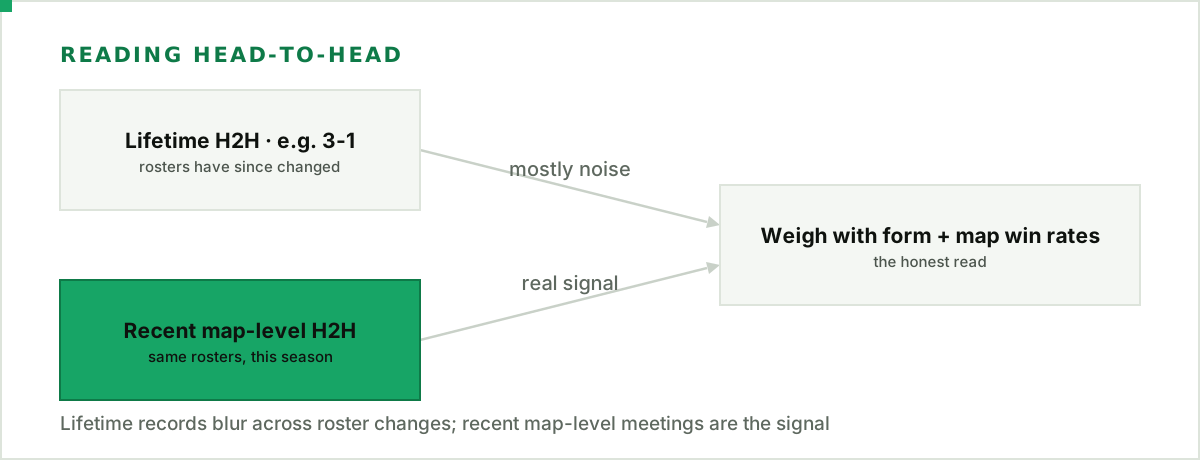
Where H2H genuinely helps is at the map level, over recent windows. If two current rosters have played Mirage three times this season, that is a real signal about preparation and matchup. Lifetime H2H across roster changes is mostly noise. Head-to-head results are meaningful enough that they feed Valve's own team ranking: the Regional Standings, a source-available, published algorithm, use head-to-head outcomes as one of their inputs.
How it is measured through the API: H2H is not a single call. It is one of four reads that make up a match preview, and two of those reads are the H2H pieces. GET /teams/{id}/h2h returns the completed-match record between two teams, and it requires an ?opponent= parameter — omit it and you get a 400. GET /teams/{id}/form returns a team's recent results, and it is a single page, not paginated, so there is no cursor to loop. Both take a team UUID, not a slug, so you resolve the slugs first.
For that reason, read H2H beside recent form and map win rates rather than on its own. The match preview guide walks through all four calls end to end.
Start free with a sandbox key: a fixed sample of past matches, no card.