VRS — Valve Regional Standings — is the official points system that decides which teams are invited to Counter-Strike Majors.
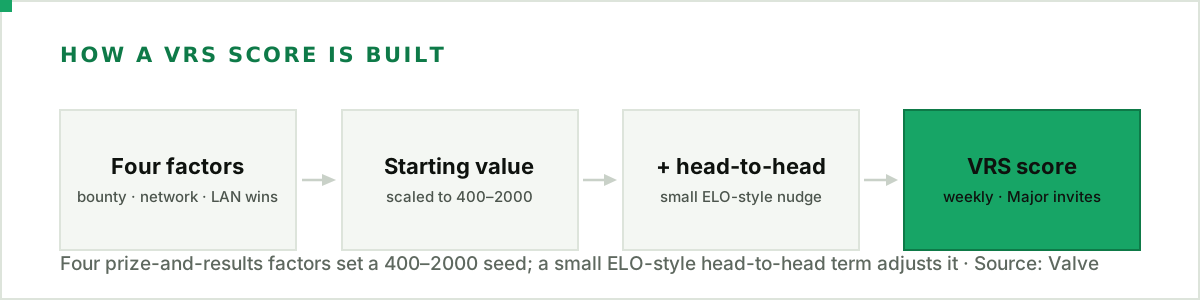
It is a points system, not an ELO rating, and the distinction matters. Valve builds each team's score from four prize-and-results factors: the money it has won, the money of the teams it has beaten, the range of distinct strong opponents it has beaten, and its recent LAN results, keeping only the best results from roughly the last six months. Prize money is weighted on a logarithmic scale — Valve's published model log-scales a team's winnings — so a single $1M payday is not worth 1,000× a $1k one, and a small ELO-style head-to-head term then nudges the total on direct matchups.
Because so much of the formula is prize-and-results weighted, VRS rewards big-event success heavily. It updates weekly, which makes it slower to react than a purely predictive rating, and it can disagree sharply with the editorial HLTV world ranking, which weights recent achievement and prestige differently. Two things set it apart: it is the actual invite mechanism for the Majors, not a fan-facing opinion, and it is publicly auditable — Valve publishes the standings and the per-team maths (source-available, and without a licence, so not strictly "open source"). The Regional in the name is load-bearing, too: teams are ranked within their region as well as globally, and Major invites are allocated per region from those standings.
VRS orders teams. For individual performance, see HLTV Rating; for how it sits beside the HLTV and ELO systems, see how CS2 rankings work.