Implied probability is a set of odds expressed as a percentage chance. For decimal odds it is simply
1 / odds.
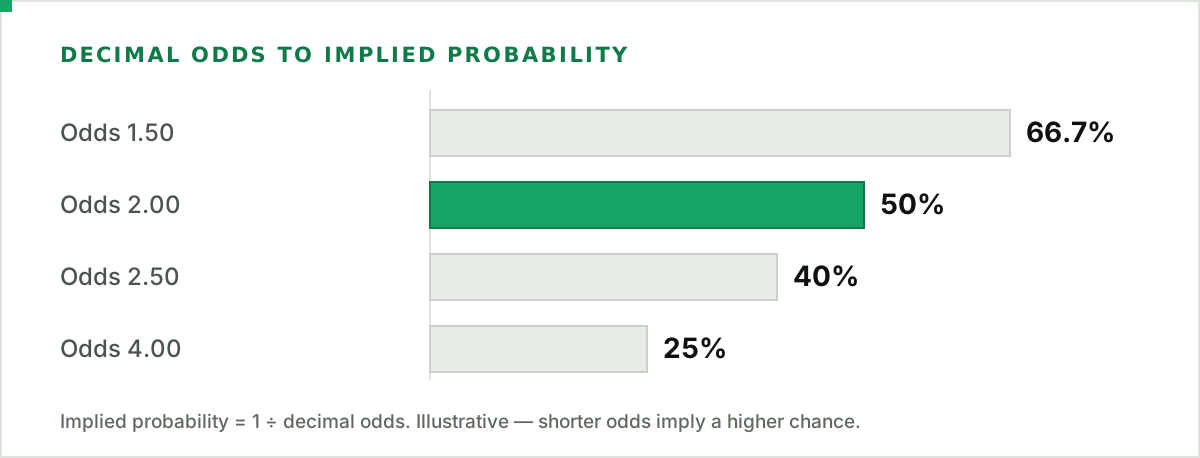
Decimal odds of 2.50 imply 1 / 2.50 = 40%; 2.00 imply 50%; 1.25 imply 80%. Shorter odds mean a higher implied chance. The conversion is arithmetic, not opinion, and every format describes the same number: decimal 1 / odds, fractional denominator / (numerator + denominator), or American, taking the odds' absolute value, 100 / (odds + 100) for a positive price and odds / (odds + 100) for a negative one (so −150 is read as 150).
The catch is that across a whole market the implied probabilities sum to more than 100%. In a two-way match market you might see 55% and 50%, totalling 105%. That extra 5 points is the vig, the margin baked into the prices, so a raw implied probability always overstates the true chance. To recover an honest number the margin has to come out, which is what de-vigging does; only then can two markets be compared like for like, or against a model.
This matters because a price is a probability estimate, and estimates are only comparable once they sit on the same scale. Research on betting markets treats the de-vigged price as the market's genuine forecast (see Berkowitz et al., 2018, on the accuracy of the sports betting market). It is the same number the market line serves: across every live CS2 market, the de-vigged sides sum to exactly 100.0000%, with nothing left to strip out. How that aggregate is built is set out in the methodology.
See how to convert odds to implied probability for worked examples across decimal, fractional and American formats.
Convert any single price with the free implied probability calculator, which also renders the same price in decimal, American and fractional odds.