The map veto is the alternating ban-and-pick sequence teams run before a CS2 series to decide which maps are played.
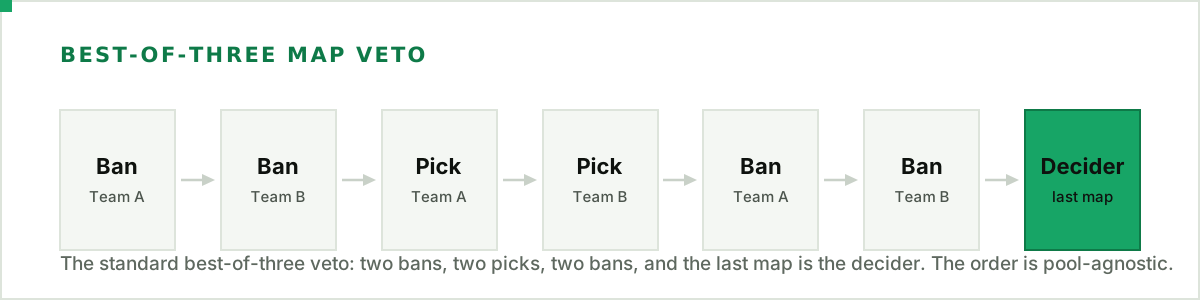
In a best-of-three, each team bans a map, each picks one, two more bans follow, and the single map left over becomes the decider. Because teams ban what they fear and pick what they practise, the veto is a public statement of preparation, often the most informative pre-match signal available. Order matters too: banning first surrenders information but shapes the pool.
Veto data is unusually useful precisely because it is revealed before the match. A team repeatedly banning the same map is telling you where its comfort ends, and the decider is, by construction, the map neither side chose. There is plenty to study — but read any totals with care, because they are heavily confounded by how long each map has been in the pool, not by fear alone. With that caveat, the pro series in our data hold roughly 82,000 bans, 33,000 picks and 19,000 deciders. A map that returned recently racks up far fewer bans than a long-standing fixture, so a raw count measures availability as much as avoidance; never read causation into it. For a model, the signal worth extracting is the rate a team bans or picks a map relative to how often it could have, not the raw tally; that framing sidesteps the pool-age confound entirely.
The pool itself changes, which is another reason not to lean on raw counts: Valve swapped Cache in for Overpass in July 2026, announced 22 June and shipped in its update of 8 July (HLTV), resetting the sample for both maps. Through the API, each ban, pick and decider is available per series at /matches/{id}/vetoes, as structured JSON.
See the CS2 map veto meta for the most-banned and most-picked maps across professional play, and the pick study for how often a team wins the map it picked.